
Best Hikes in Arches National Park
Best Hikes in Arches National Park
Choose the right Arches National Park hike for your time, fitness, season, and comfort with desert heat, slickrock, sand, and limited shade.
Quick answer: what are the best hikes in Arches National Park?
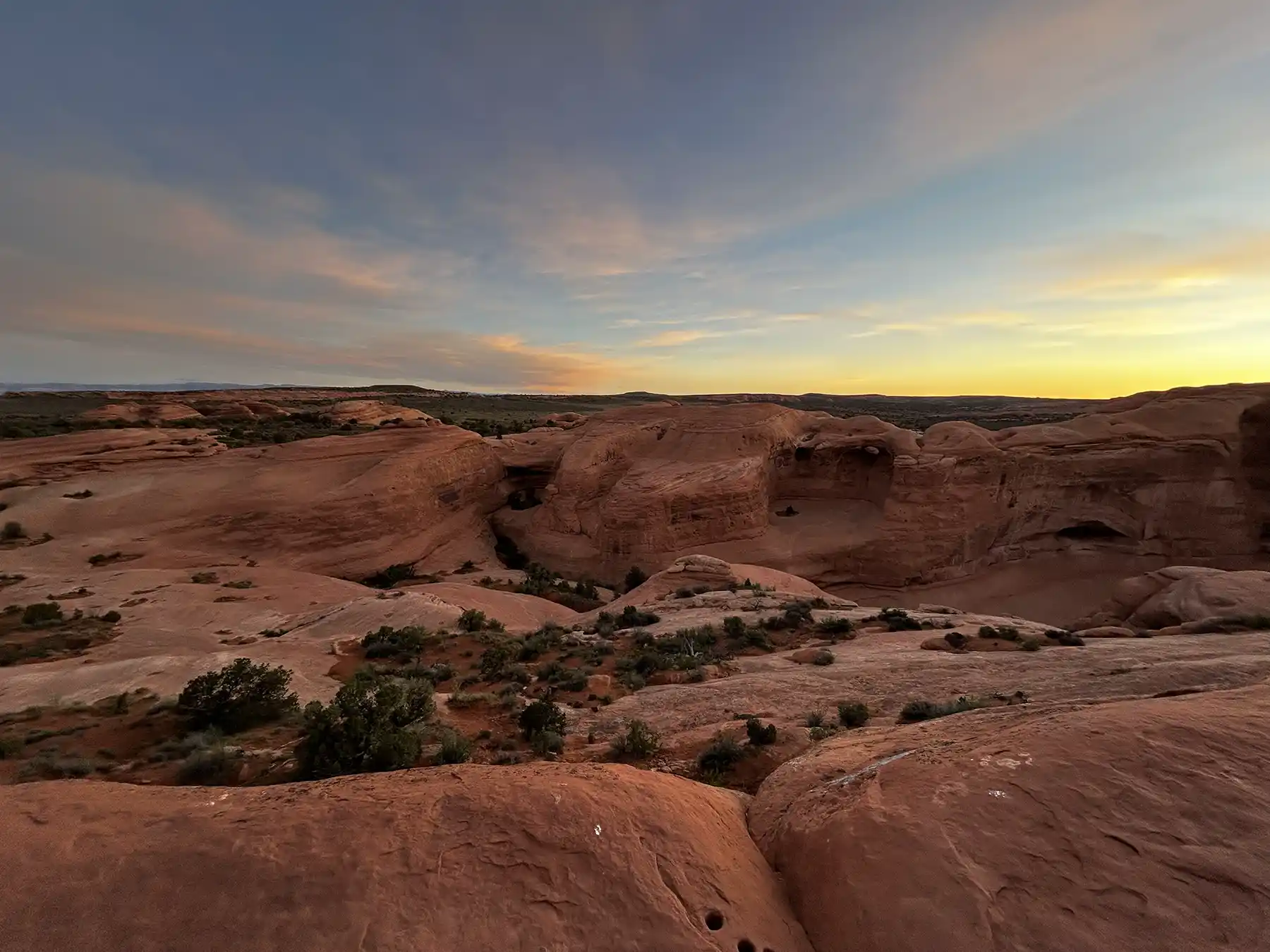
The best hikes in Arches National Park are Delicate Arch, Landscape Arch in Devils Garden, The Windows and Double Arch, Park Avenue, Sand Dune Arch, Broken Arch, and the full Devils Garden route for experienced hikers. First-time visitors should usually choose one longer hike, then add short arch walks during cooler parts of the day.
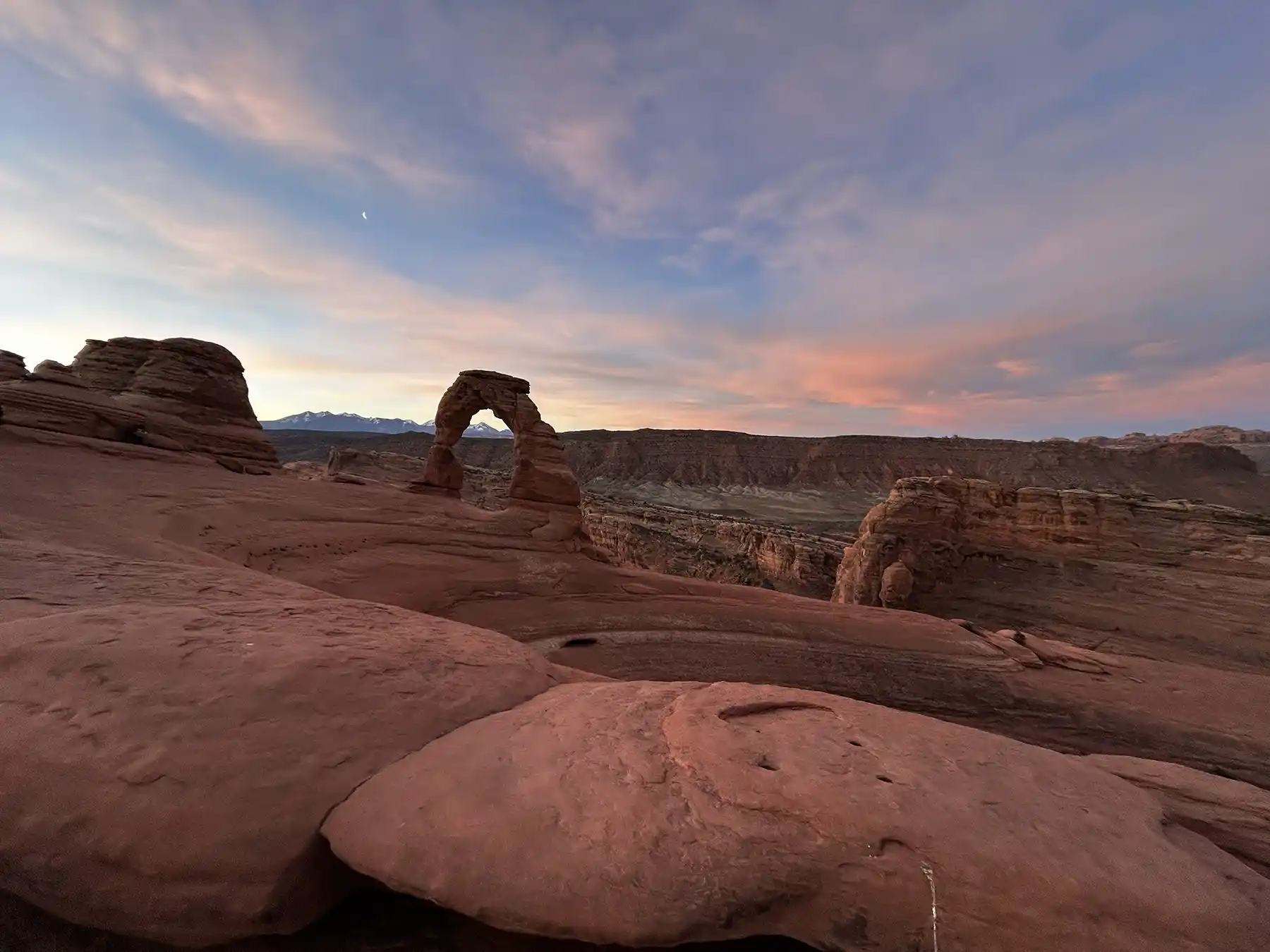
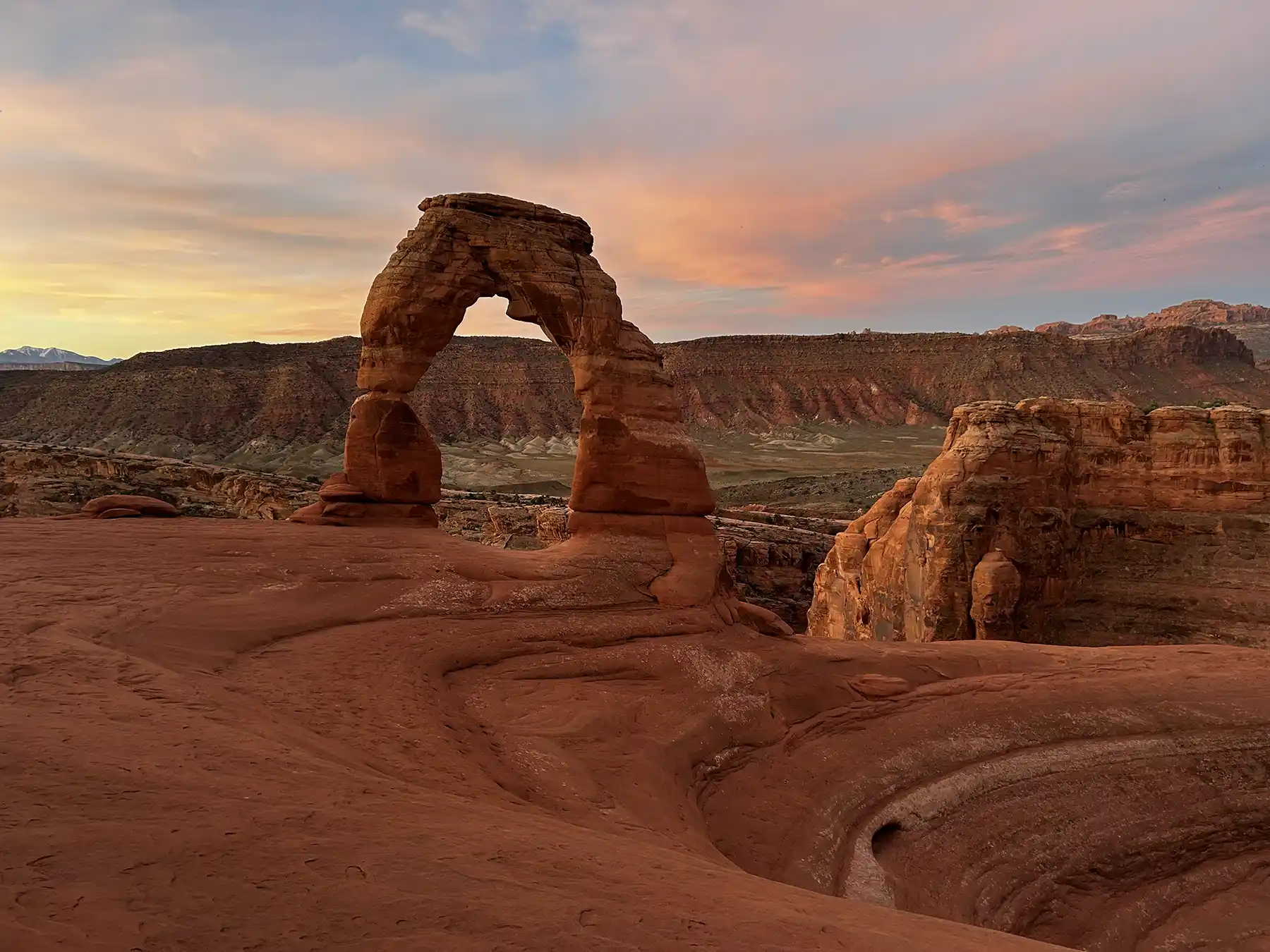
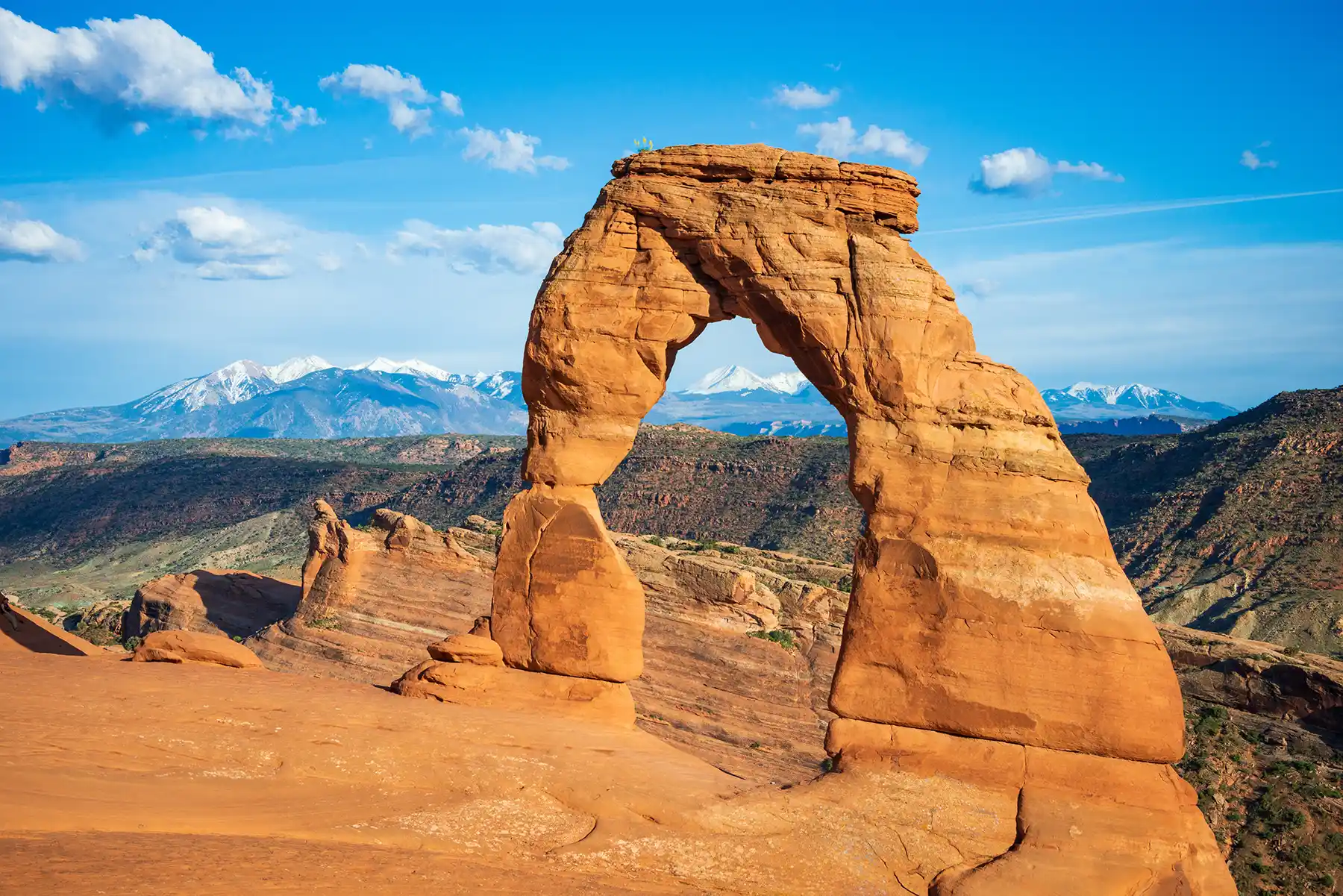
Best iconic hike: Delicate Arch, a 3-mile round-trip trail with about 480 feet of elevation gain.
Best easy high-reward hike: Landscape Arch, 1.9 miles round trip from the Devils Garden trailhead.
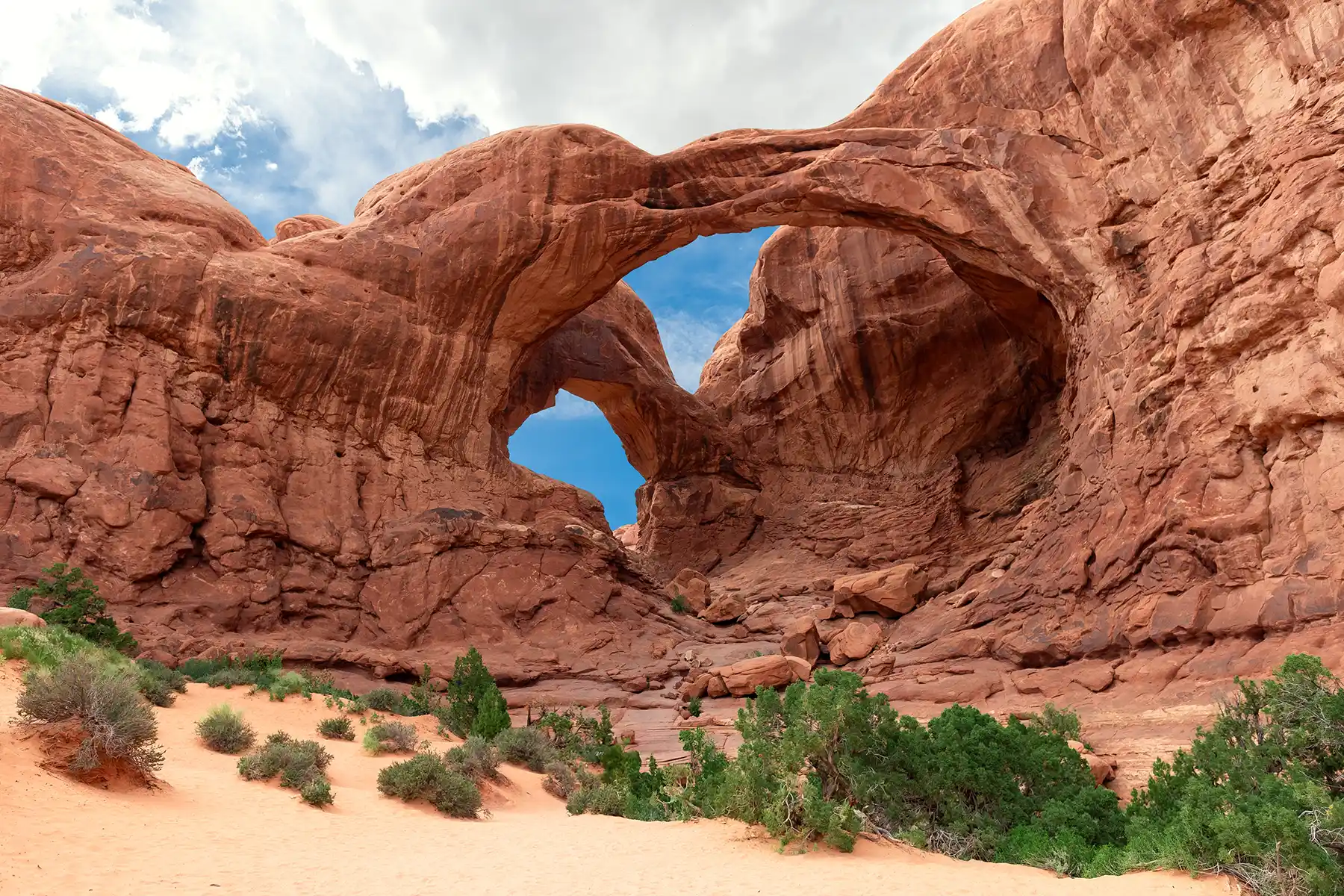
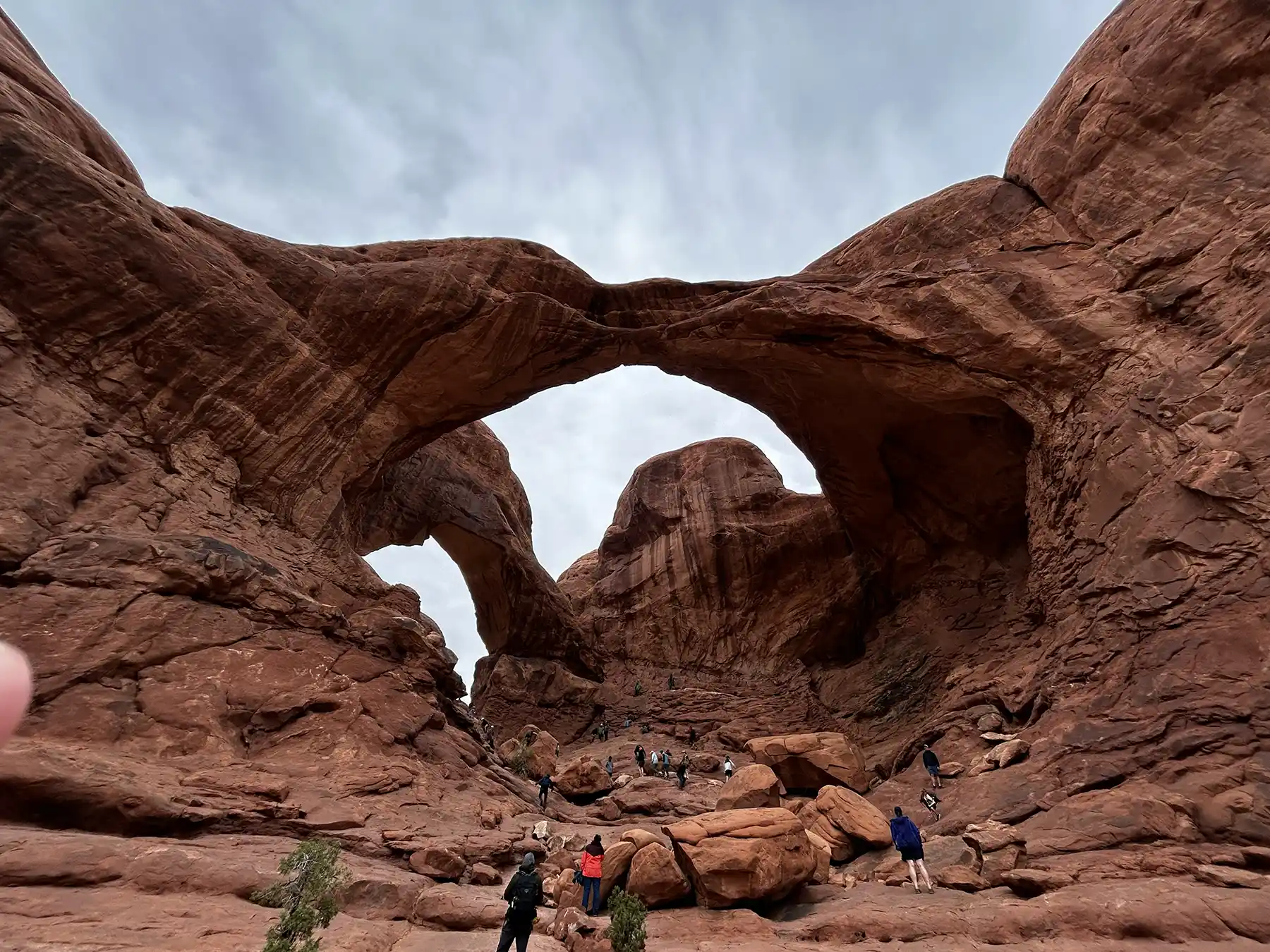
Best family-friendly area: The Windows Section and Double Arch, where several major formations sit close together.
Best strenuous route: Devils Garden beyond Landscape Arch, including Double O Arch and optional spurs.
Best hiking strategy: start early, carry more water than feels necessary, and avoid long exposed hikes in midday heat.
How to choose the right Arches hike
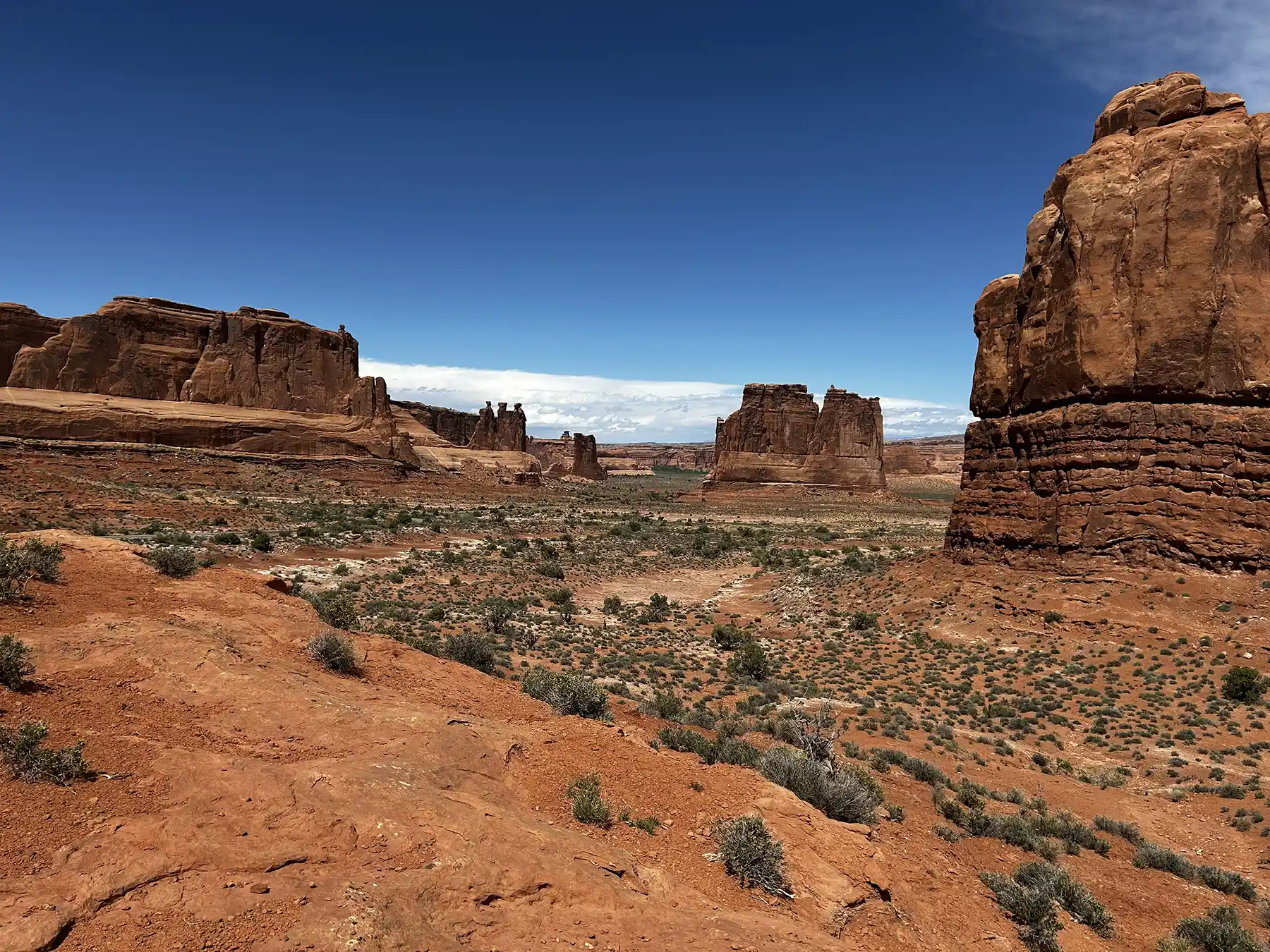
Arches National Park is a strong hiking park because many of its best trails lead directly to named arches, sandstone fins, viewpoints, and desert amphitheaters. The challenge is not only choosing the prettiest trail. It is choosing the trail that fits your group, the weather, the time of day, and the parking reality when you arrive.
For most first-time visitors, the best plan is simple: hike Delicate Arch or Landscape Arch as your main outing, then use shorter trails like Double Arch, The Windows, Sand Dune Arch, or Park Avenue to round out the day. Stronger hikers can build a bigger day around Devils Garden, but the route becomes much more demanding after Landscape Arch.
Trail conditions, entrance patterns, weather, and parking can change quickly in Arches. Before you go, check the official National Park Service alerts, current conditions, and weather forecast, then adjust your route if heat, storms, ice, or congestion make your first-choice hike a poor fit.
Best hikes in Arches National Park by trip style
The best Arches hike depends on what you want from the day. Delicate Arch is the classic choice if you want the park's signature view. Landscape Arch is better if you want a lower-effort trail with major scenery. The Windows and Double Arch work well for families, mixed-ability groups, and anyone short on time.
Use this quick breakdown to match the route to your plans before you commit to a hot, exposed trail.
| Hike | Best For | Distance | Trail Notes |
|---|---|---|---|
| Delicate Arch | Classic Arches view | 3 miles round trip | Exposed slickrock, 480 feet of gain, very busy around sunset |
| Landscape Arch | Easy Devils Garden scenery | 1.9 miles round trip | Relatively flat compared with the harder route beyond it |
| The Windows and Double Arch | Families and short visits | Short walks in one area | High reward with several arches close together |
| Park Avenue | Sandstone wall scenery | 1 mile one way | Less arch-focused, but excellent for scale and desert drama |
| Devils Garden to Double O Arch | Experienced hikers | 4.1 miles round trip | Rocky footing, narrow ledges, scrambling, and exposure |
Wanderers' planning tip
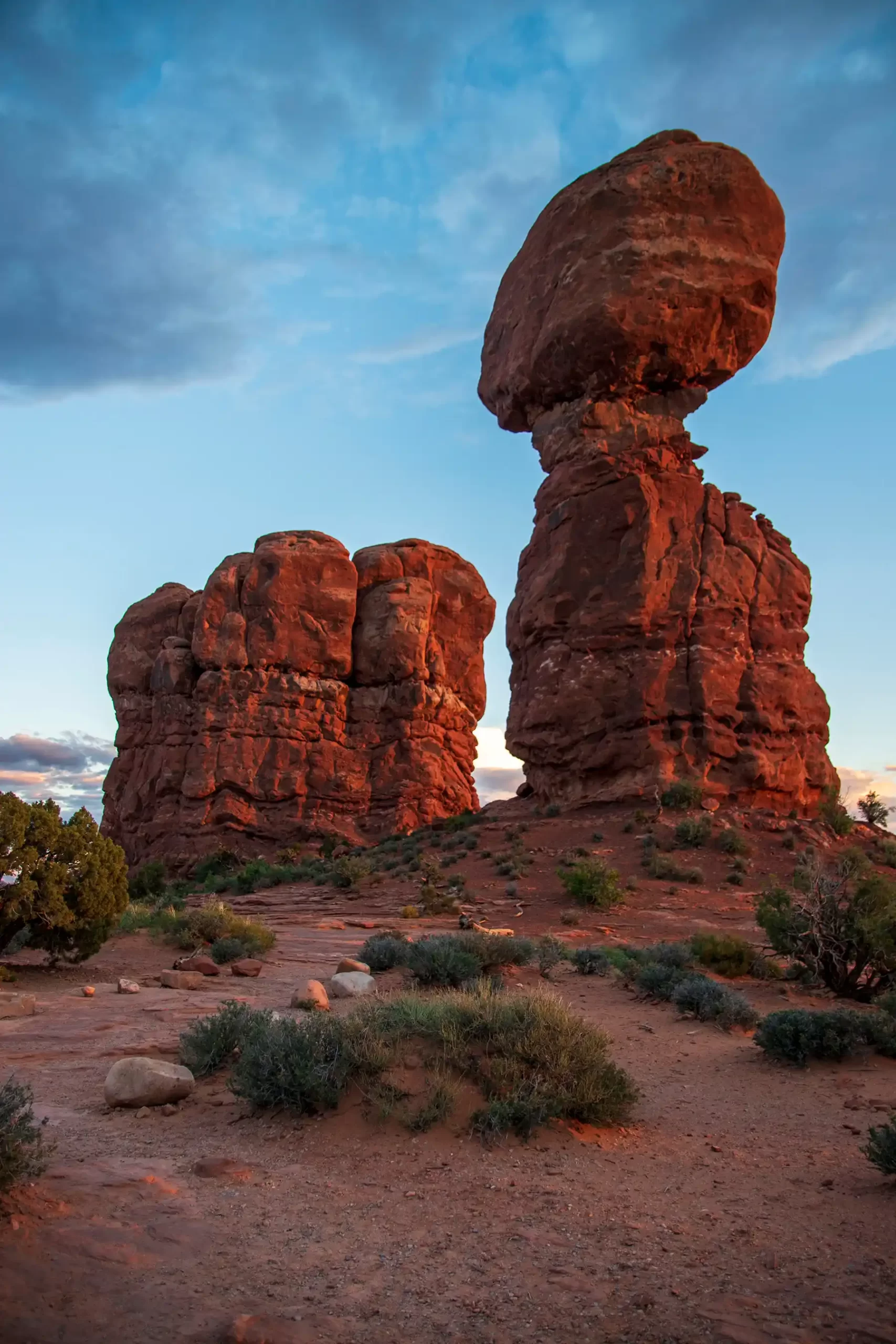
If you only have one day in Arches, choose Delicate Arch or Landscape Arch as your main hike. Then add The Windows, Double Arch, and Balanced Rock if heat, parking, and energy allow.
Before you go
Dress for exposed desert hiking, not just the mileage
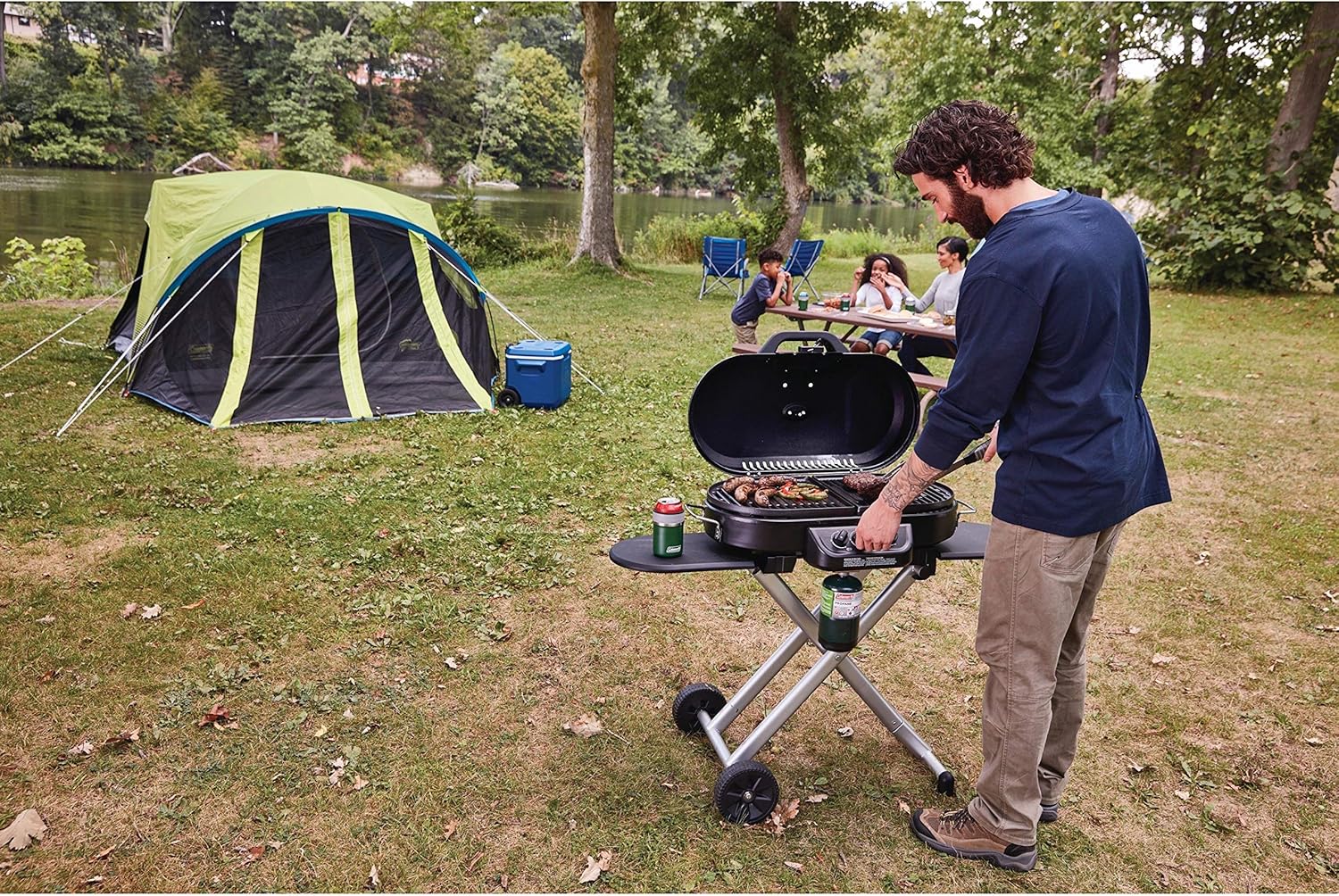
Sun protection, breathable layers, sturdy footwear, and enough water matter on Arches trails because shade is limited and slickrock reflects heat.
Best easy hikes in Arches National Park
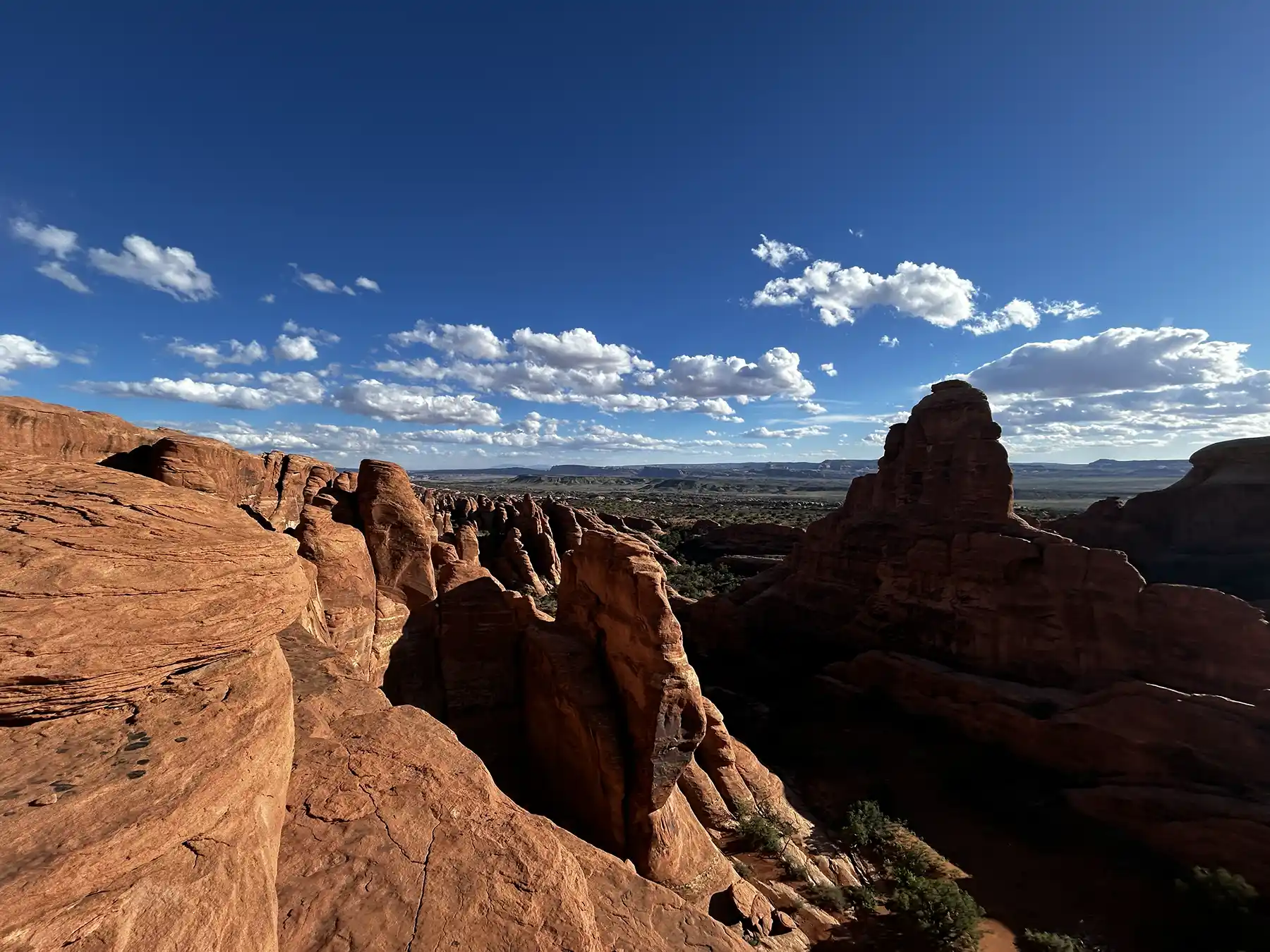
Easy hikes in Arches are ideal for families, casual hikers, photographers, and first-time visitors who want big scenery without committing to the more exposed slickrock routes. They are also smart choices in summer, when heat can turn moderate trails into poor decisions by late morning.
Landscape Arch
Landscape Arch is one of the best easy hikes in the park because the trail reaches a remarkable arch without the scrambling and ledges found farther along Devils Garden. The round-trip distance to Landscape Arch is 1.9 miles, with optional short spurs to Pine Tree Arch and Tunnel Arch adding about 0.5 mile.
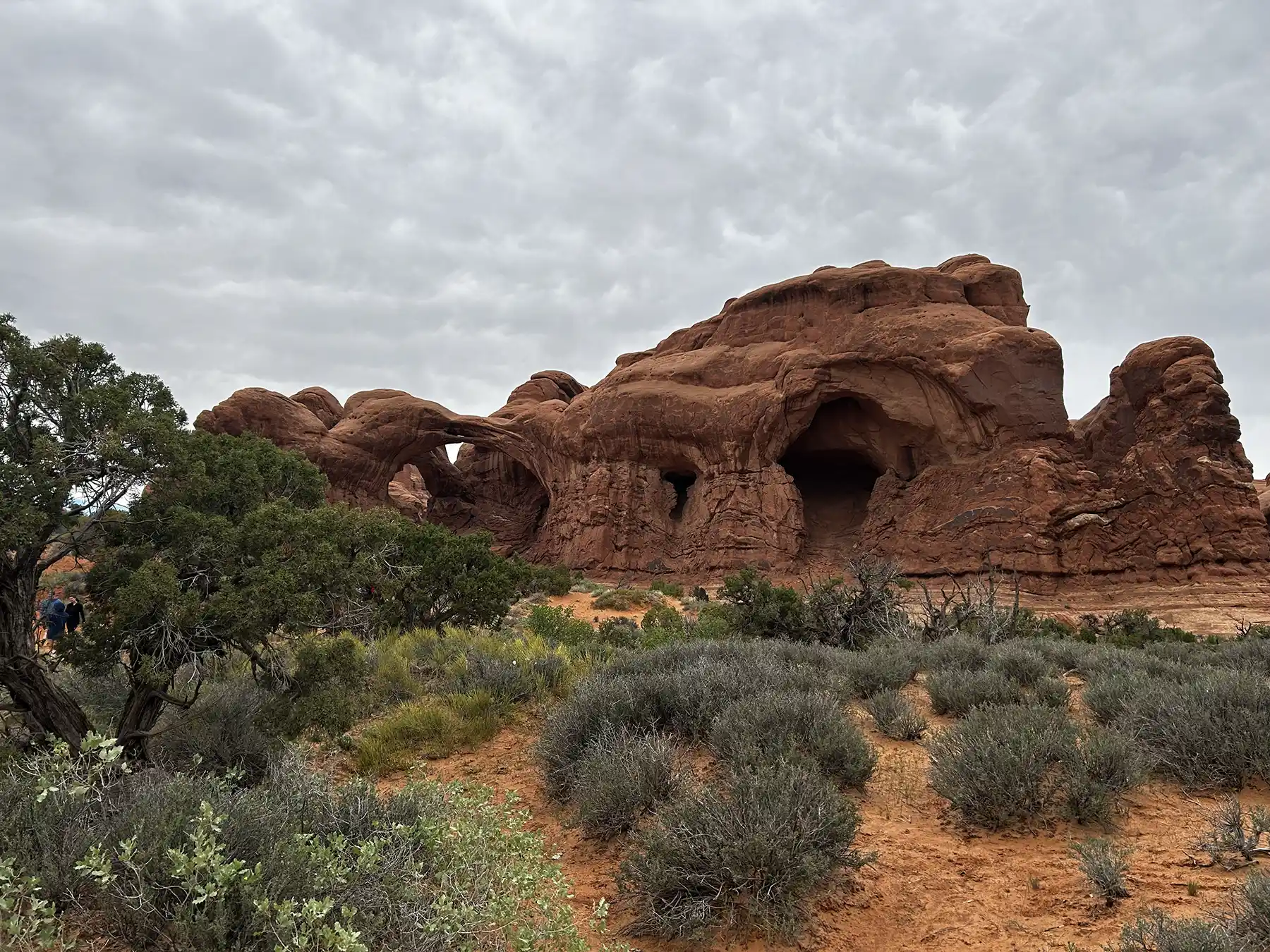
The Windows and Double Arch
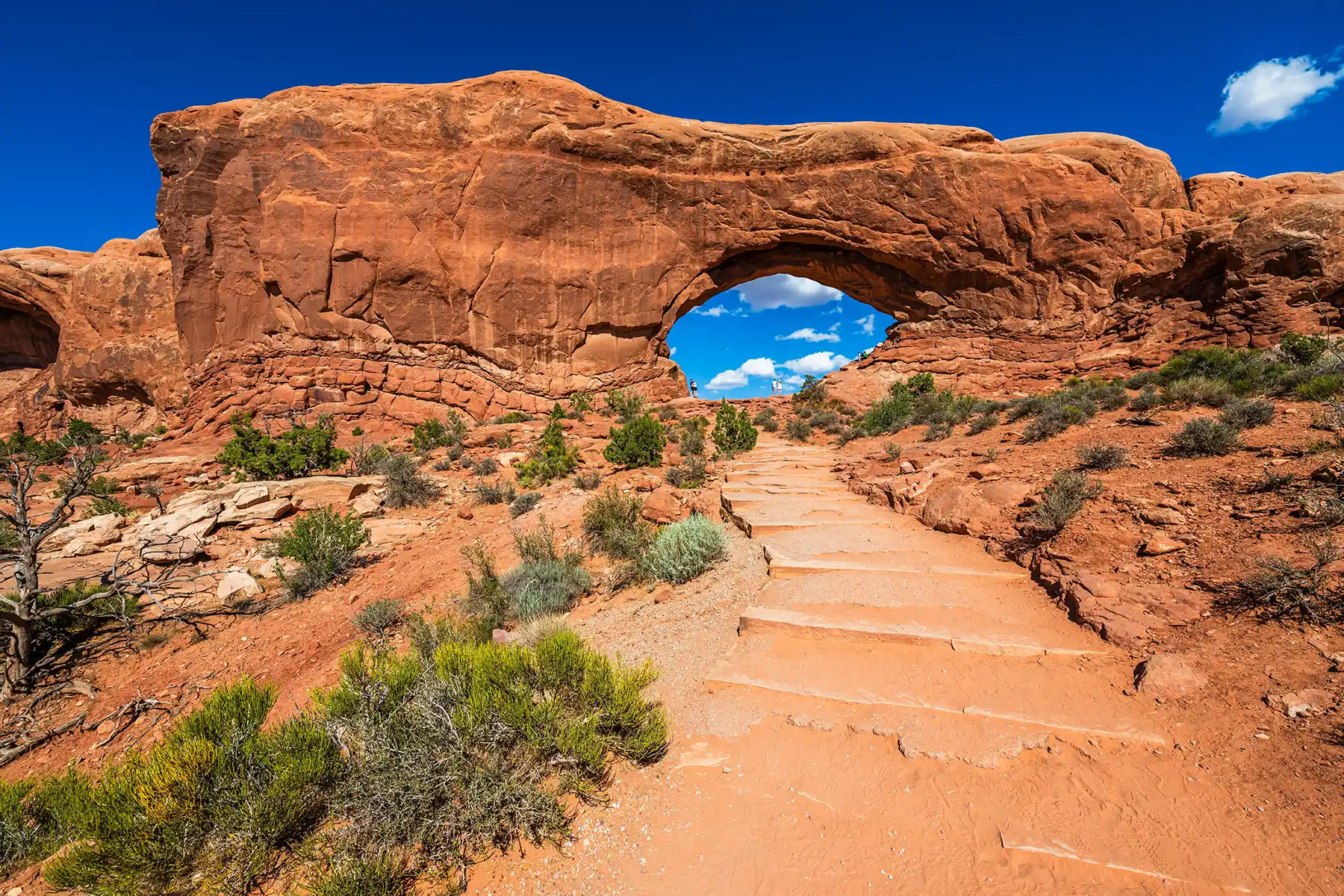
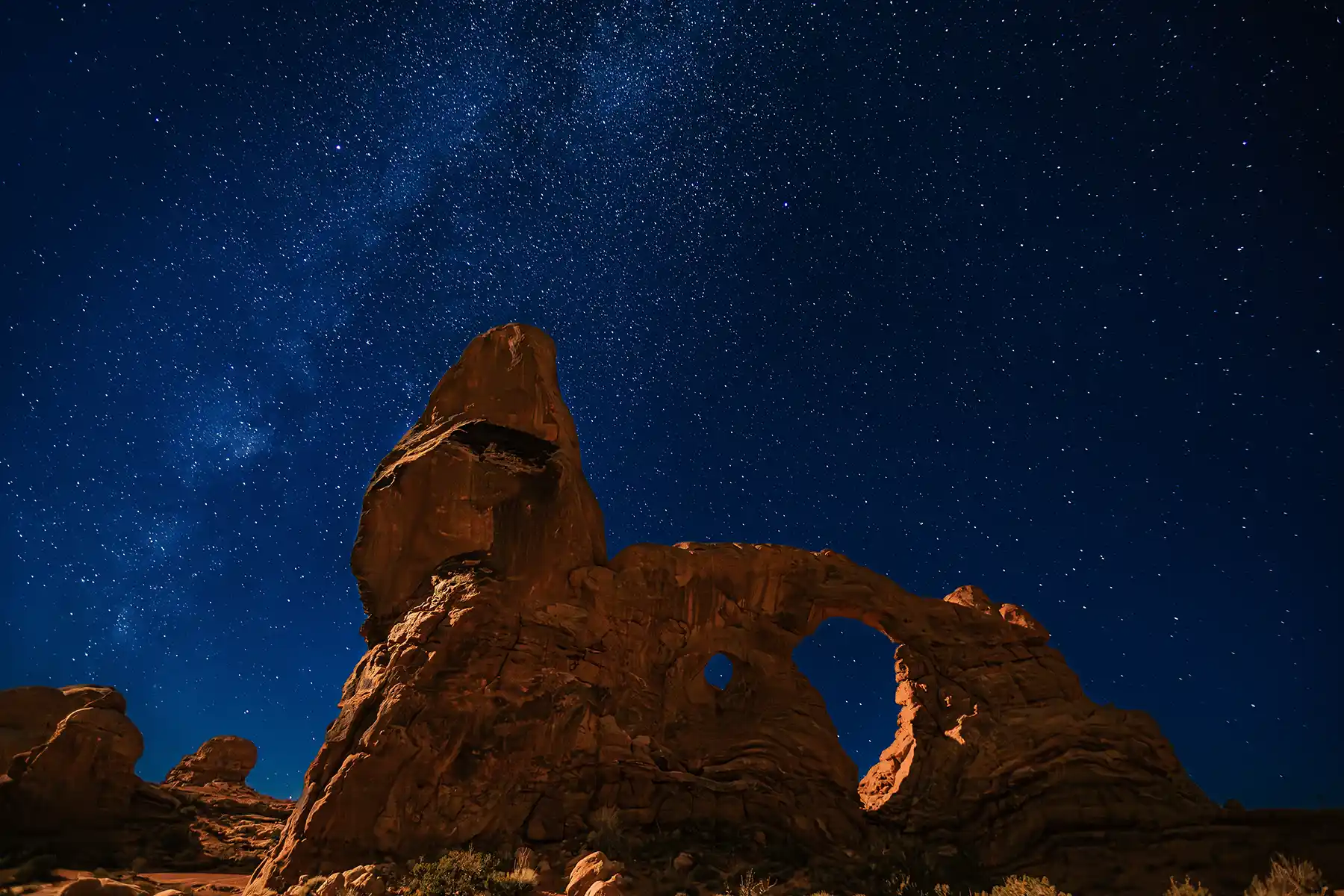
The Windows Section is one of the most efficient hiking stops in Arches. North Window, South Window, Turret Arch, and nearby Double Arch let you see several major formations with short walks from the parking area. Go early if you want easier parking and cooler walking conditions.
Sand Dune Arch and Broken Arch
Sand Dune Arch is a good short walk for travelers who want a shaded-feeling sandstone slot and a break from broad exposed slickrock. Broken Arch can be added when conditions are comfortable and your group wants a quieter, slightly longer outing. Stay on durable surfaces and avoid stepping on biological soil crust beside the route.
Best easy-hike strategy
Pair Landscape Arch with The Windows Section if you want a high-reward Arches hiking day without taking on the hardest parts of Devils Garden.
Best moderate and strenuous hikes in Arches
The harder Arches hikes are rewarding, but they deserve more respect than their mileage might suggest. Exposure, heat, rock surfaces, crowds, and route-finding can all raise the difficulty. Start early, carry enough water, and be willing to turn around if the conditions are wrong.
Delicate Arch
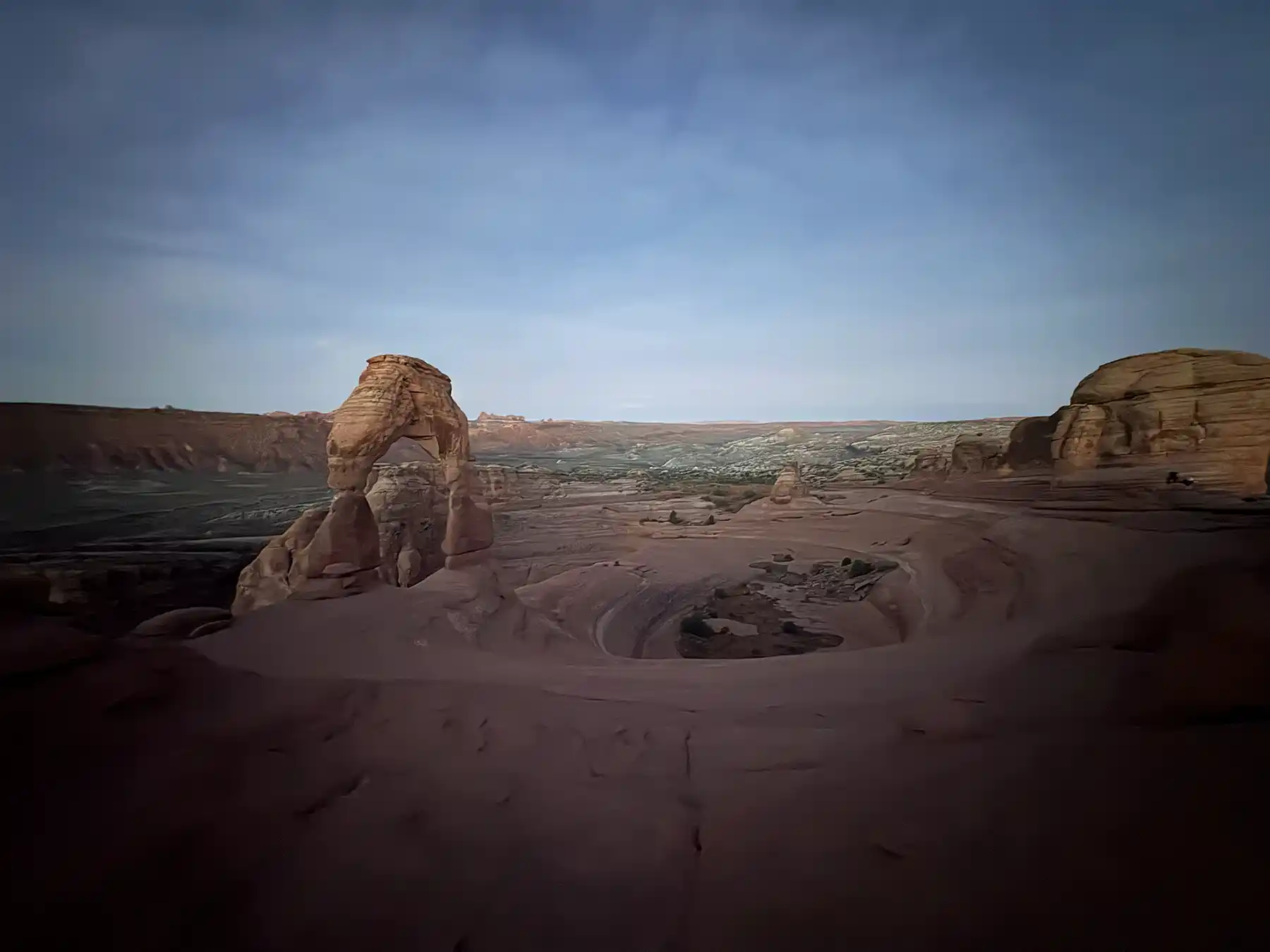
Delicate Arch is the signature Arches hike: 3 miles round trip with about 480 feet of elevation gain. The trail climbs steadily across open terrain and slickrock to the largest free-standing arch in the park. It is especially popular around sunset, but that timing can also mean crowded viewpoints, full parking, and a return hike near dark. Carry a headlamp if you plan to stay late.
Devils Garden to Double O Arch
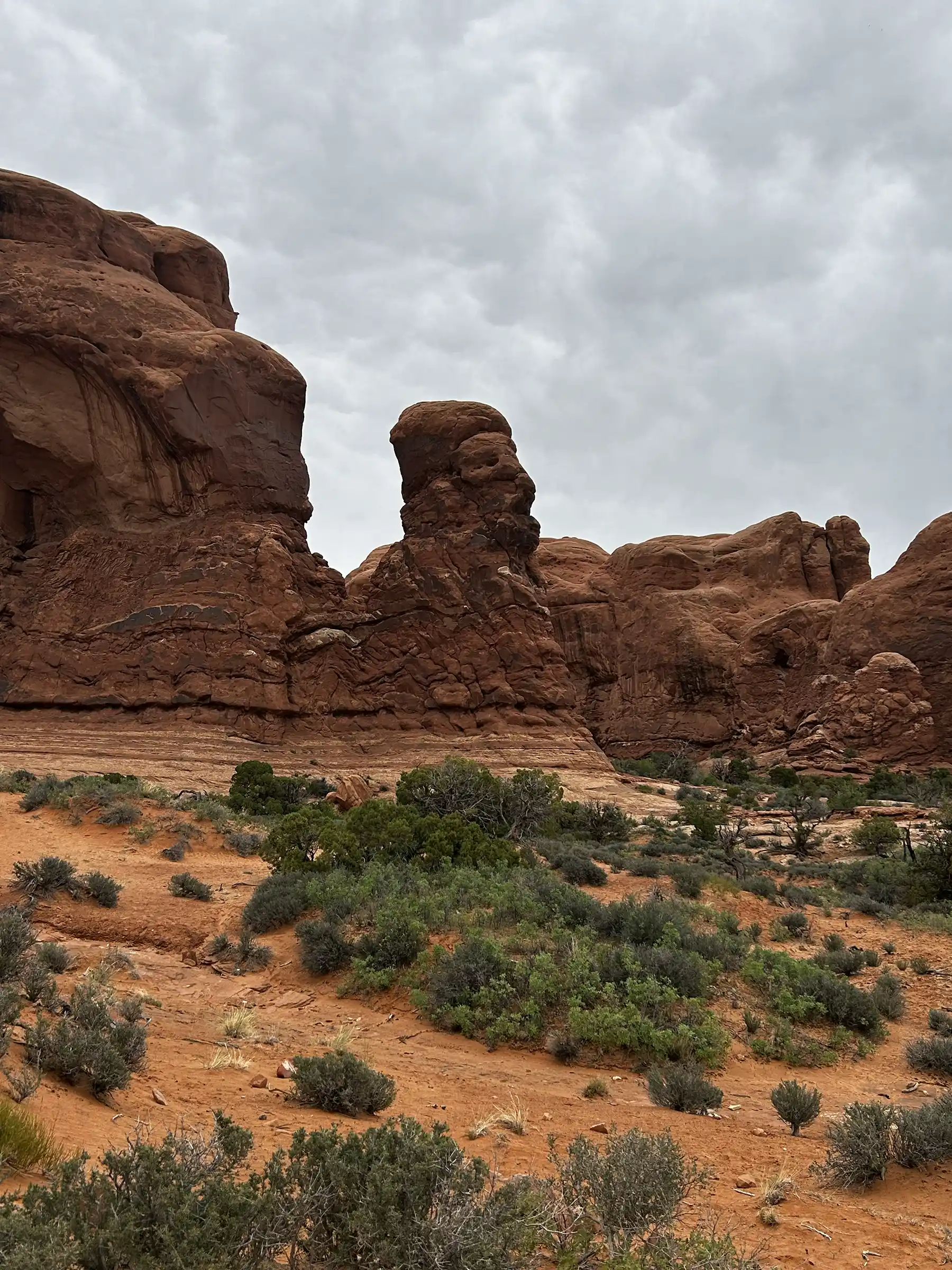
Beyond Landscape Arch, Devils Garden changes character. The route to Double O Arch is about 4.1 miles round trip and includes rocky footing, narrow ledges, steep sandstone fins, and places where hikers may use hands and feet. This is not the best choice for people uncomfortable with heights, wet rock, icy conditions, or route-finding on stone.
Primitive Trail and full Devils Garden loop
The Primitive Trail is the most difficult segment of the Devils Garden system. The full route with spurs can stretch to about 7.9 miles, depending on which arches you include. Choose it only if your group is comfortable with scrambling, exposure, route-finding, and a long exposed day in the desert.
Trail reality check
Delicate Arch is famous, not effortless. Devils Garden is easy only to Landscape Arch. Beyond that point, the trail becomes much more demanding.
Best time of day and season to hike in Arches
The best time to hike in Arches is usually early morning, especially from spring through fall. Parking lots can fill early, and desert heat becomes a real safety factor as the day builds. Late afternoon can also work well for shorter hikes, but sunset crowds are common at Delicate Arch.
Spring and fall usually offer the most comfortable hiking weather, though they are also busy. Summer requires stricter heat planning, shorter routes, and extra water. Winter can be quiet and beautiful, but snow or ice can make slickrock trails slippery and harder to follow.
Season-by-season hiking guidance
- Spring: strong hiking weather, busy parking, and variable storms or wind.
- Summer: very hot afternoons; choose short early hikes and avoid strenuous midday routes.
- Fall: comfortable hiking conditions with continued high visitation around weekends and holidays.
- Winter: fewer crowds, colder starts, shorter daylight, and possible ice on shaded rock.
Before you go
In 2026, Arches announced that advance timed-entry reservations are not required, but entrance rules, weather impacts, and temporary parking restrictions can change. Check the current National Park Service alerts before your hike.

Wanderers' gear note
Good desert hiking gear solves simple problems
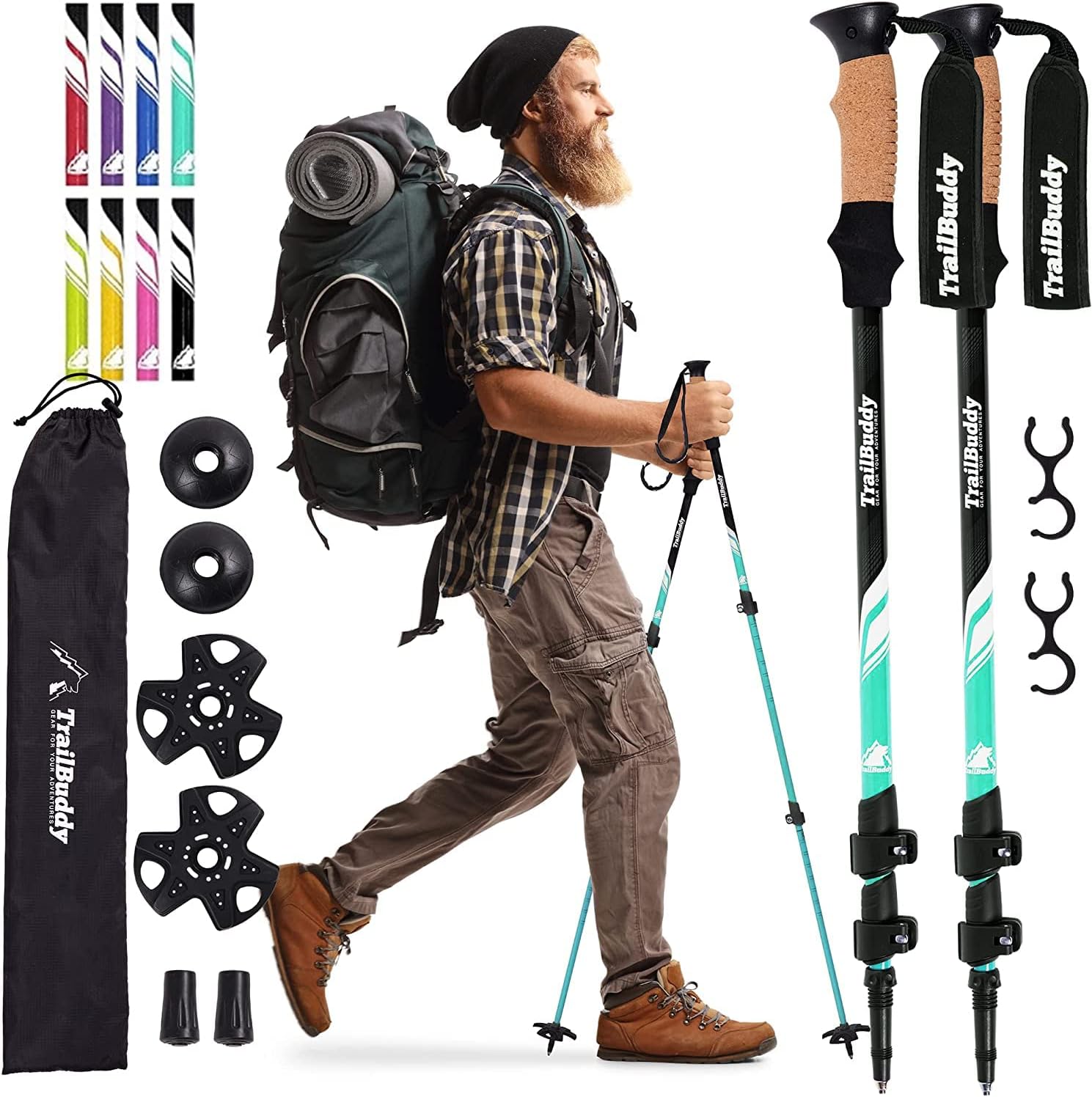
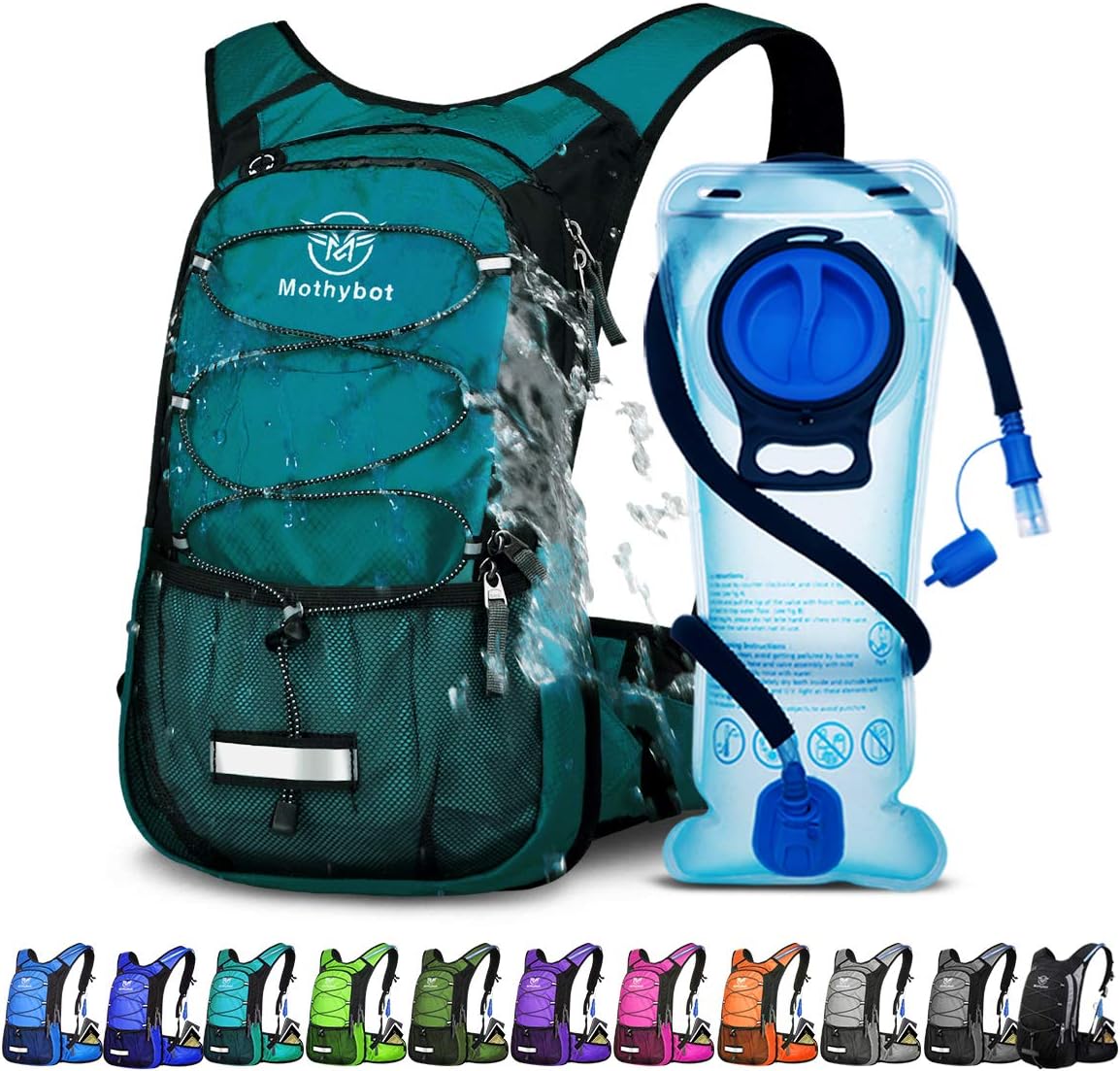
For Arches, prioritize water capacity, sun coverage, traction, snacks, and a headlamp before adding comfort extras for camp.
Arches hiking safety and what to pack
Arches is accessible from Moab, but the hiking environment is still serious high desert. The National Park Service recommends carrying at least 2 to 3 liters of water per person for front-country hikes, with 4 liters or more for backcountry routes. Water is available at the visitor center and Devils Garden Campground, not at every trailhead.
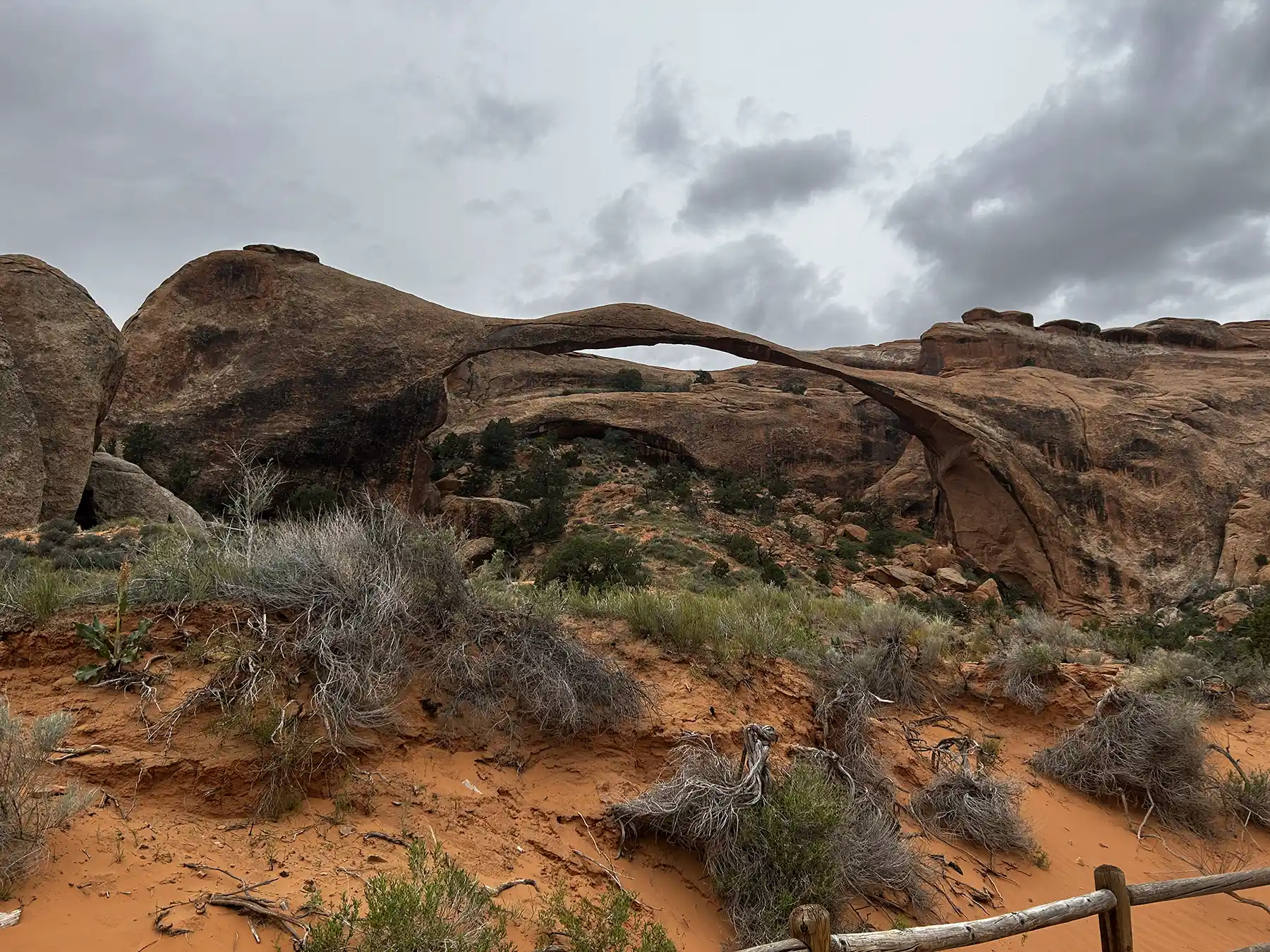
Many Arches trails use cairns to mark routes across broad rock surfaces. Follow official route markers, do not build new cairns, and avoid stepping on biological soil crust. The park also prohibits climbing, walking, standing, or rappelling on arches.
Desert day-hike packing list
- 2 to 3 liters of water per person for front-country hikes, plus extra in the vehicle.
- Salty snacks and enough calories for hot-weather hiking.
- Sun hat, sunglasses, sunscreen, and breathable long sleeves.
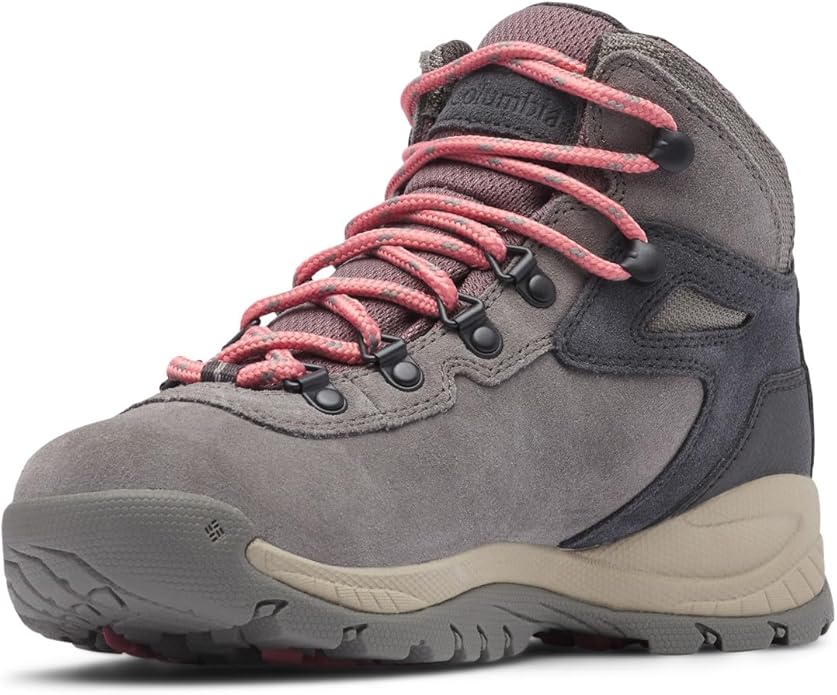
- Hiking shoes or boots with traction for slickrock, sand, and uneven stone.
- Headlamp for sunrise, sunset, or any hike that might run late.
- Map, downloaded park information, and a backup plan if cell service is poor.
- Light rain shell or layers when storms, wind, cold mornings, or winter conditions are possible.
A better trip starts early
Early mornings solve several Arches hiking problems at once: cooler temperatures, better light, more parking options, and more flexibility if plans change.
Common questions about the best hikes in Arches National Park
Use these quick answers to choose an Arches hike that fits your time, season, and comfort level.