
Wildlife in Arches National Park
Learn which animals live in Arches, when they are most active, and how to watch wildlife responsibly in Utah's high-desert sandstone country.
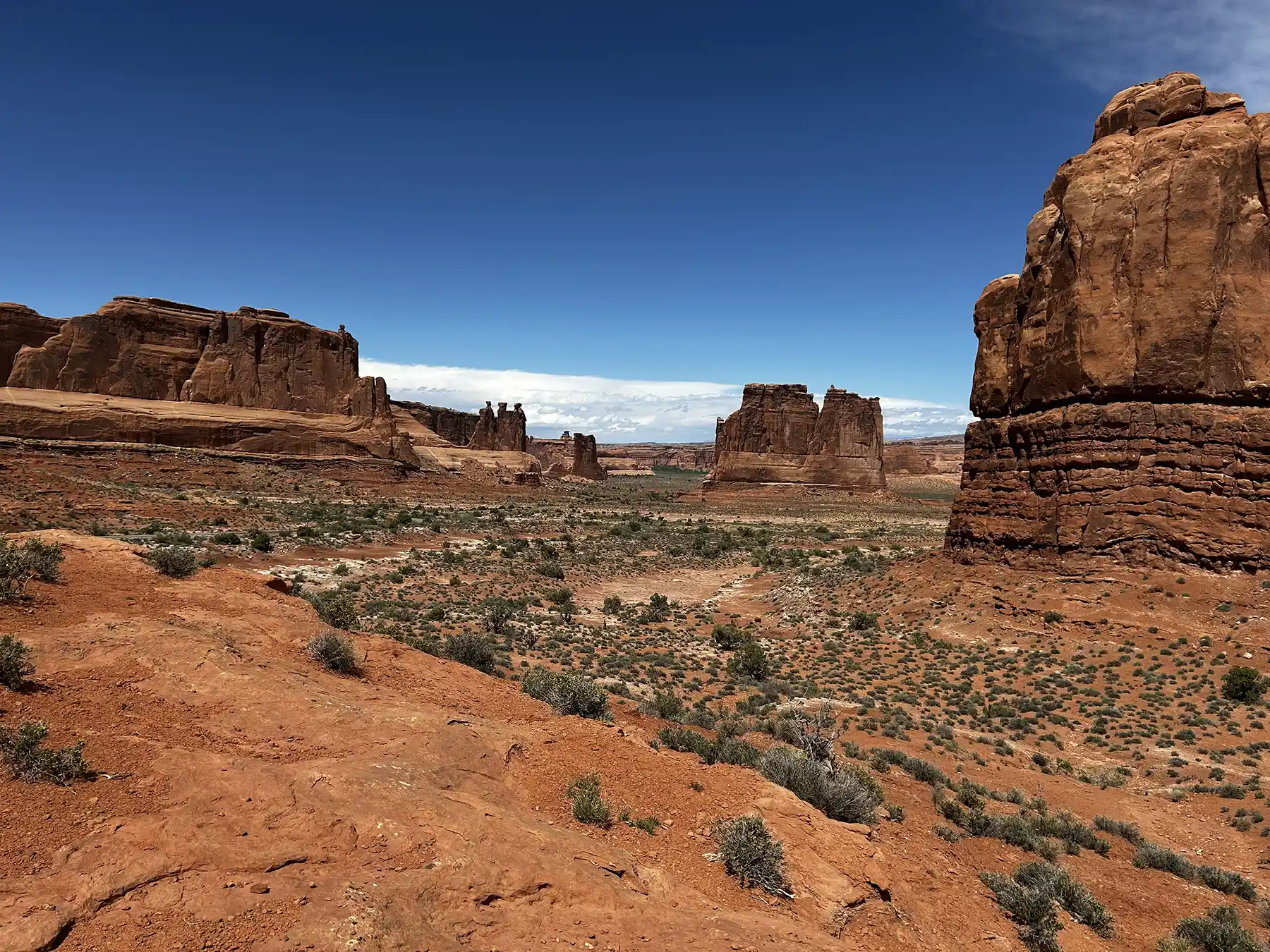
Quick answer: what wildlife lives in Arches National Park?
Wildlife in Arches National Park is shaped by desert survival. Visitors usually notice birds, lizards, rabbits, rock squirrels, and occasional mule deer first, while many mammals leave tracks or burrows instead of easy sightings. Coyotes, snakes, bats, and desert bighorn sheep live here too.
Most visible wildlife: birds, lizards, rabbits, rock squirrels, and mule deer.
Best viewing times: early morning and evening, when the desert is cooler.
Best places to scan: cliff edges, washes, shrubs, water-influenced areas, and talus.
Most important rule: watch from a distance, secure food and trash, and never feed wildlife.
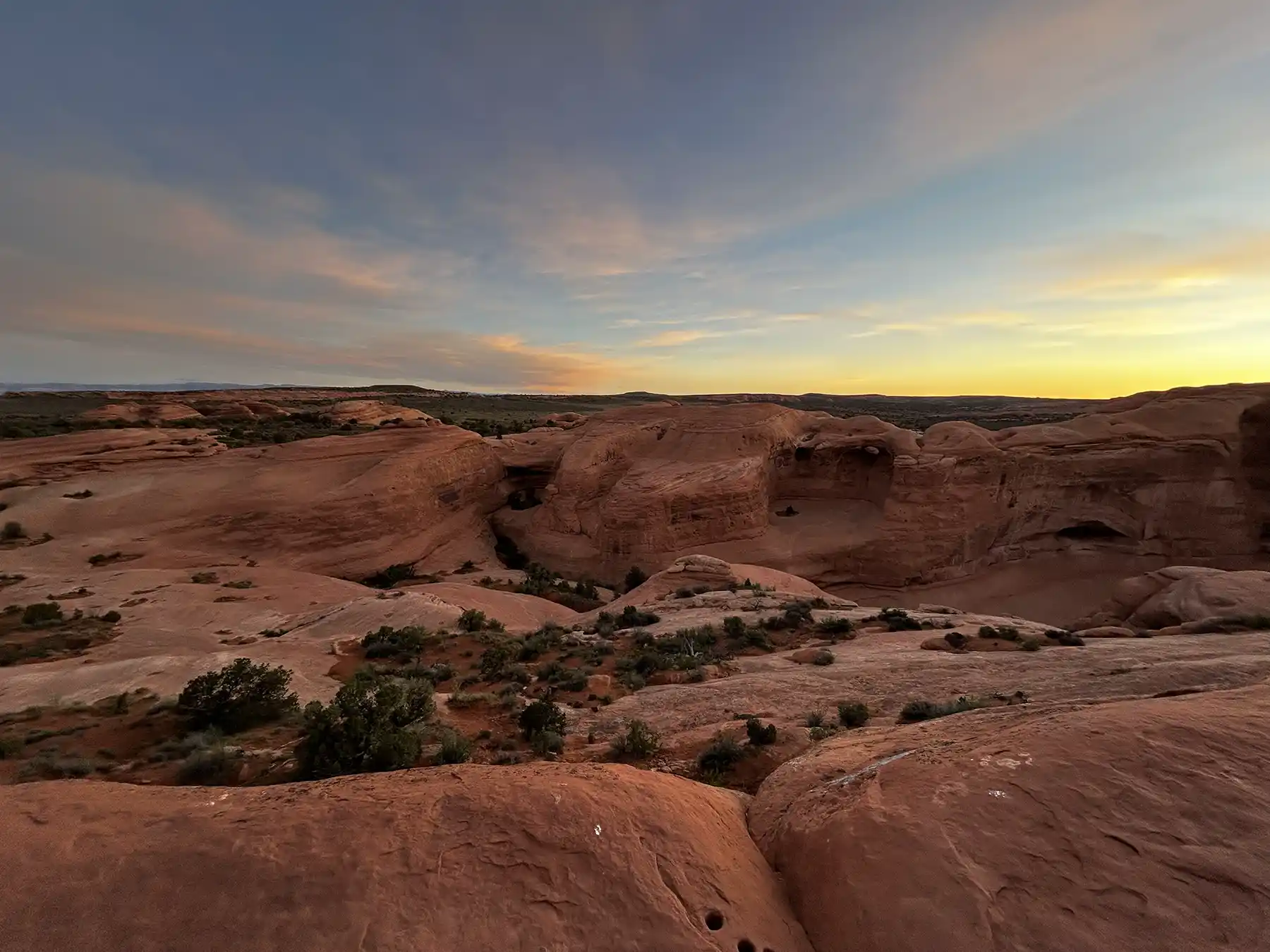
Why wildlife watching in Arches takes patience
Arches is hot, dry, and exposed, so the best wildlife clues are often small: lizard tracks in sand, a raven riding lift, deer browse, or fresh burrow openings at a wash. Before your trip, check National Park Service alerts, pet rules, and safety guidance because heat, storms, and closures can change quickly.
What animals live in Arches National Park?
The Arches wildlife list is shaped by scarce water, sandstone terrain, biological soil crust, and drought-tolerant vegetation. Small animals use burrows, rock gaps, shrubs, and short activity windows to conserve moisture. Larger animals need territory, so sightings depend on habitat and season.
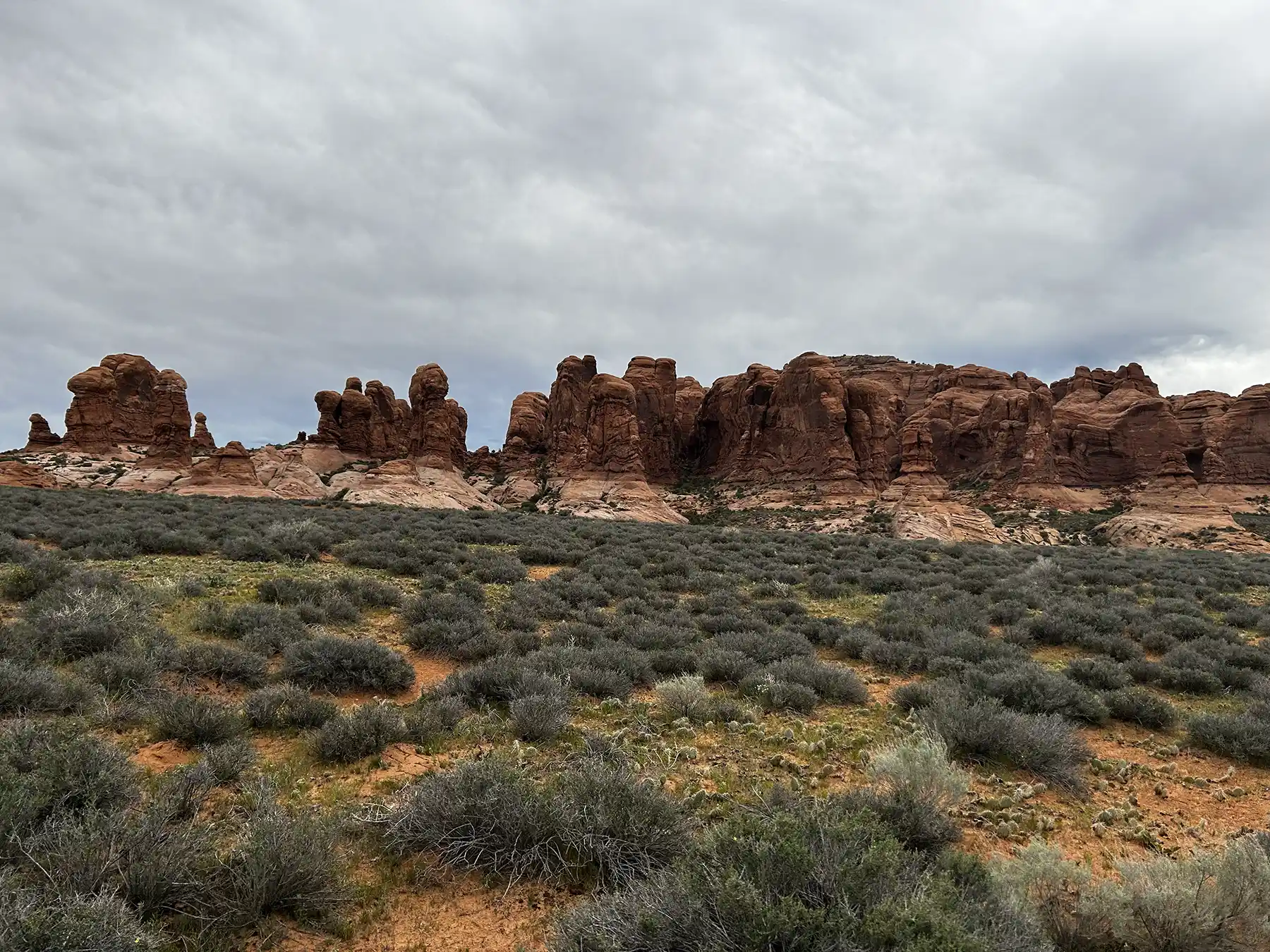
| Activity Pattern | Animals To Watch For | Best Time | Planning Notes |
|---|---|---|---|
| Nocturnal | Rodents, bats, owls, foxes, ringtails | Night | Check sandy washes for tracks the next morning. |
| Dawn and dusk | Mule deer, rabbits, coyotes, songbirds | Morning and evening | Use pullouts, washes, and vegetated edges. |
| Daytime | Lizards, ravens, vultures, swifts, small mammals | Mild days | Activity shifts with rock temperature and shade. |
Wanderers' viewing tip
Read habitat first. Shade, cover, insects, seeds, and nearby water matter more than the busiest viewpoint.
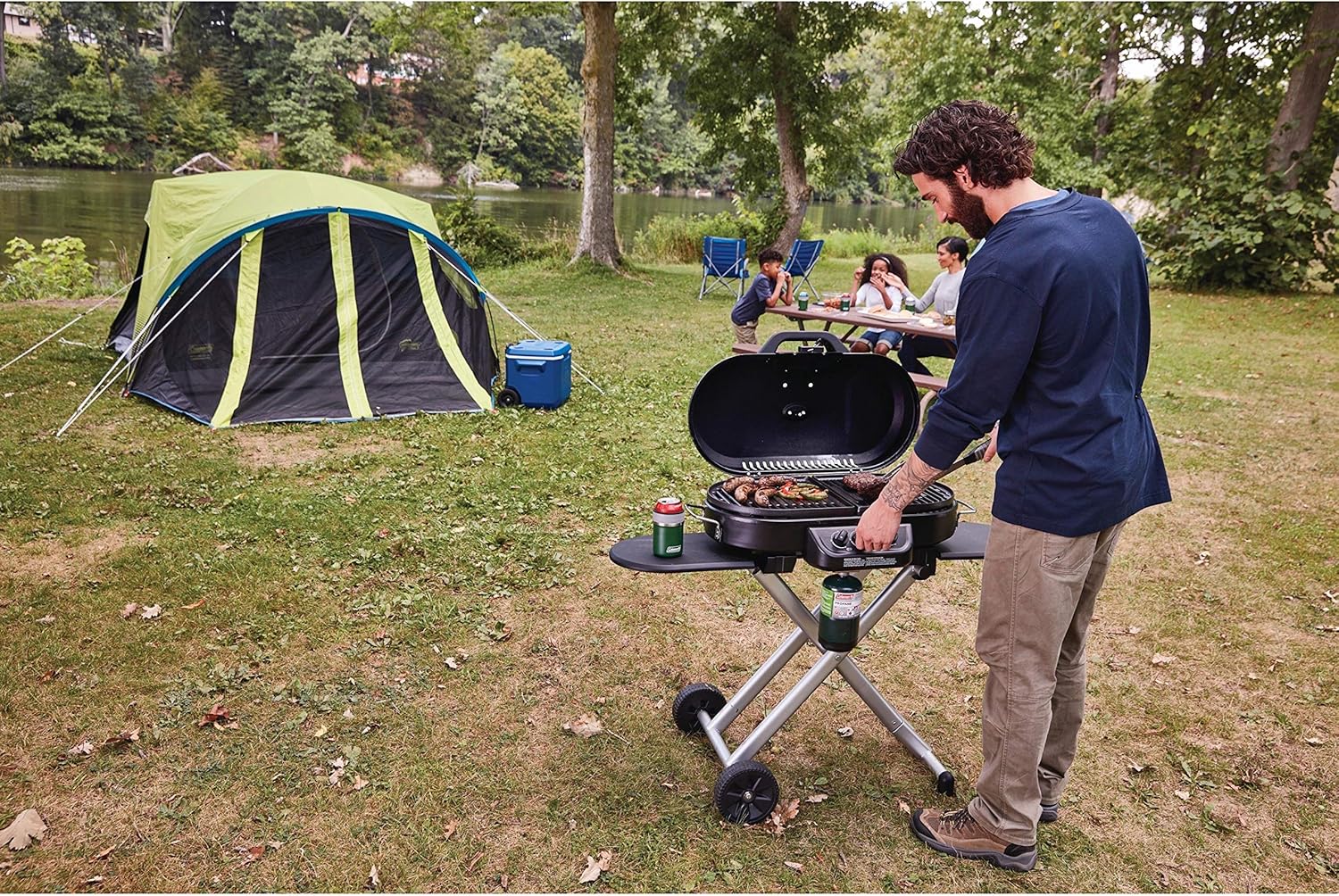
Before you go
Pack for quiet desert observation
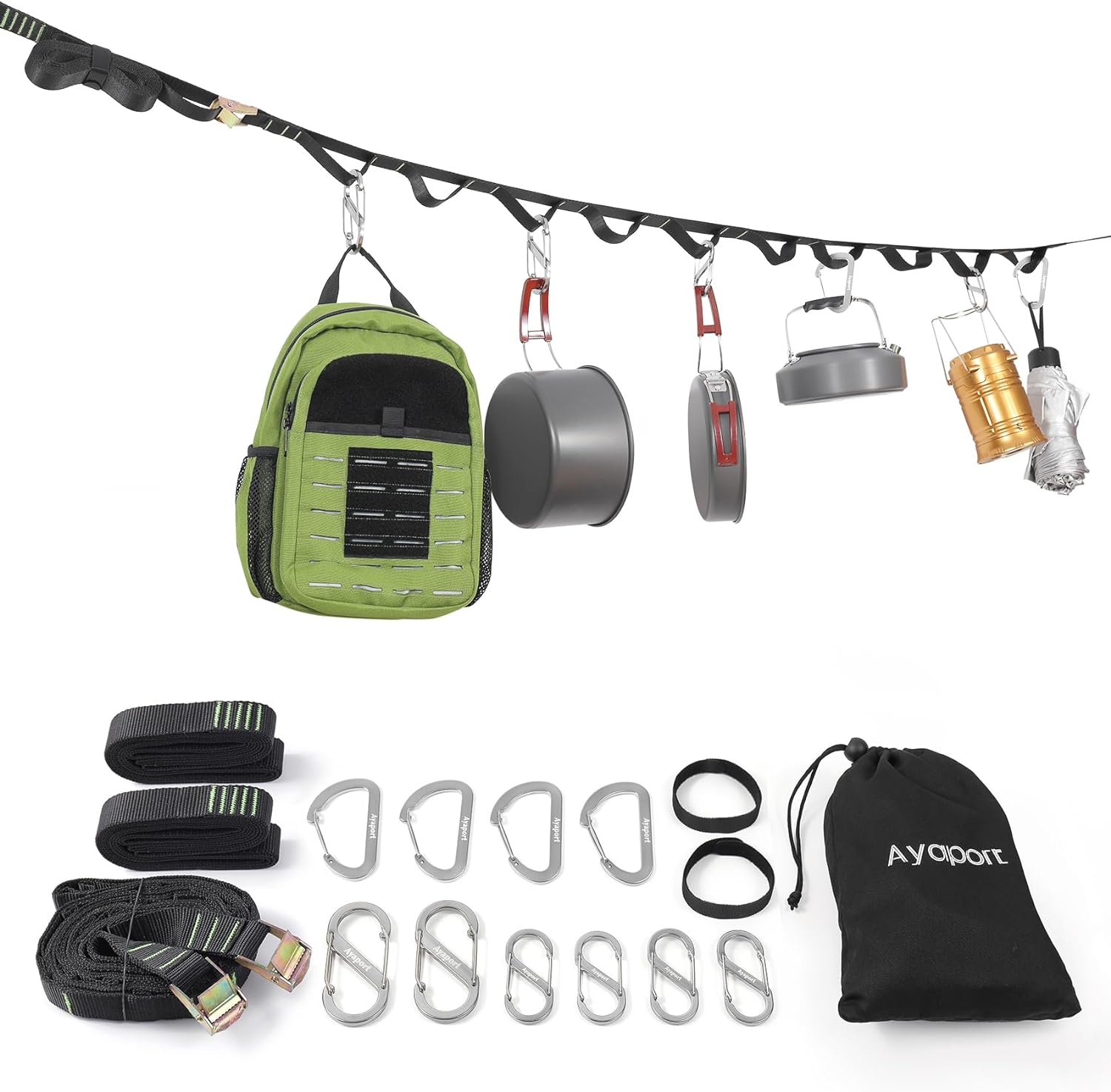
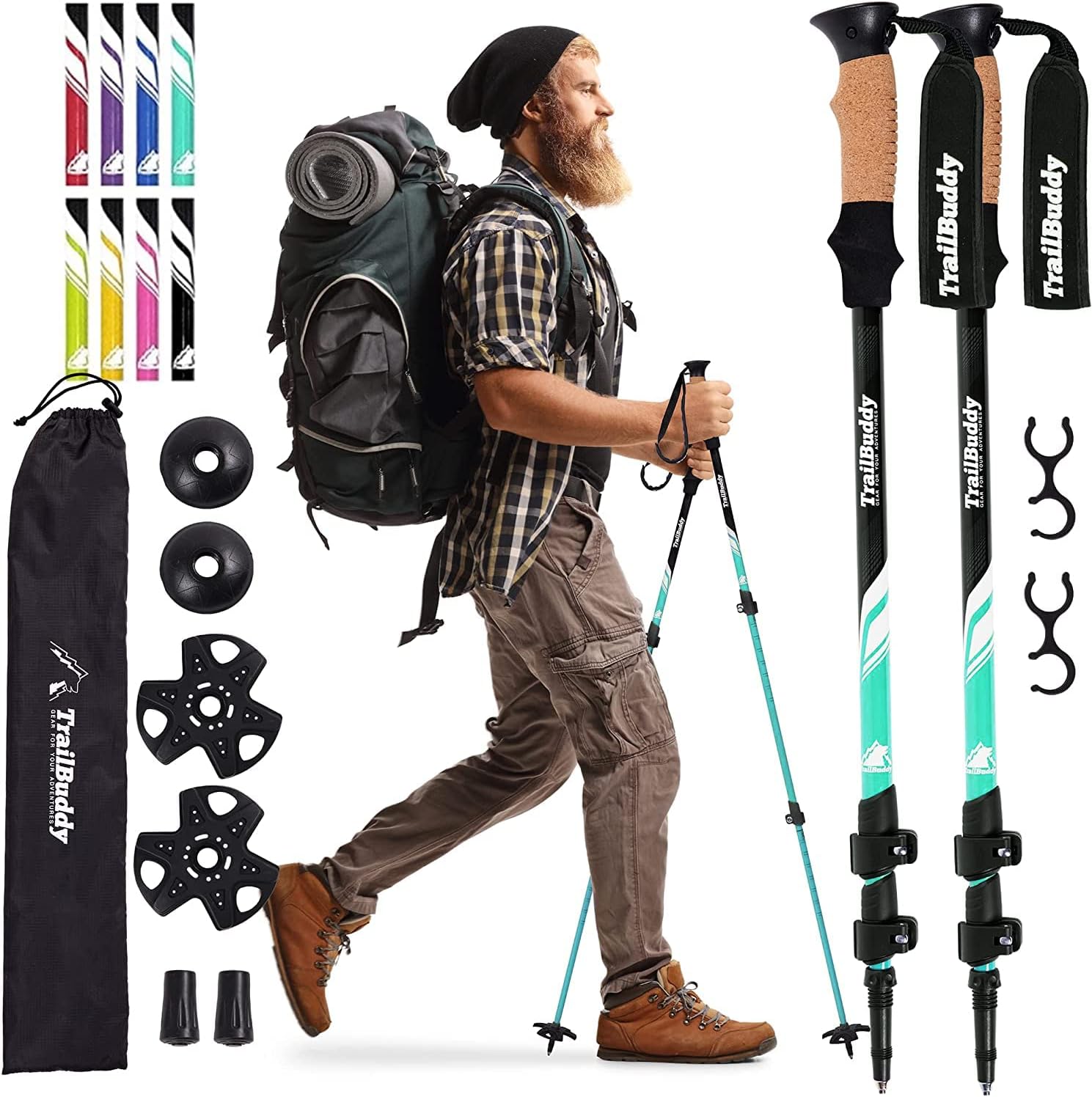
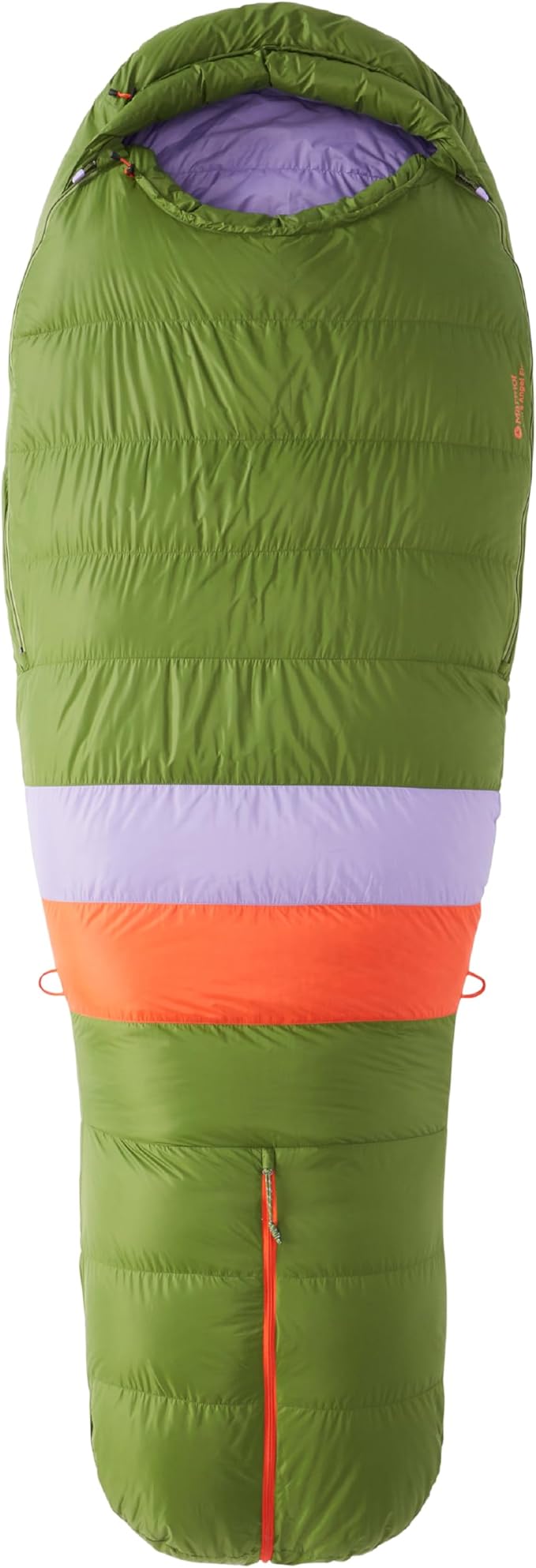
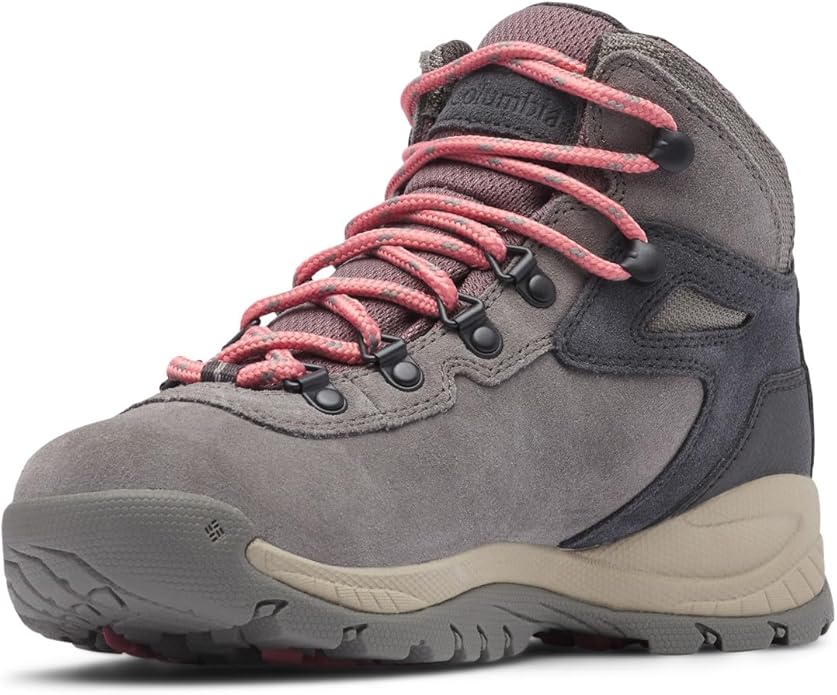
Desert wildlife stops are easier when water, sun protection, binoculars, and layers are easy to reach.
Birds in Arches National Park
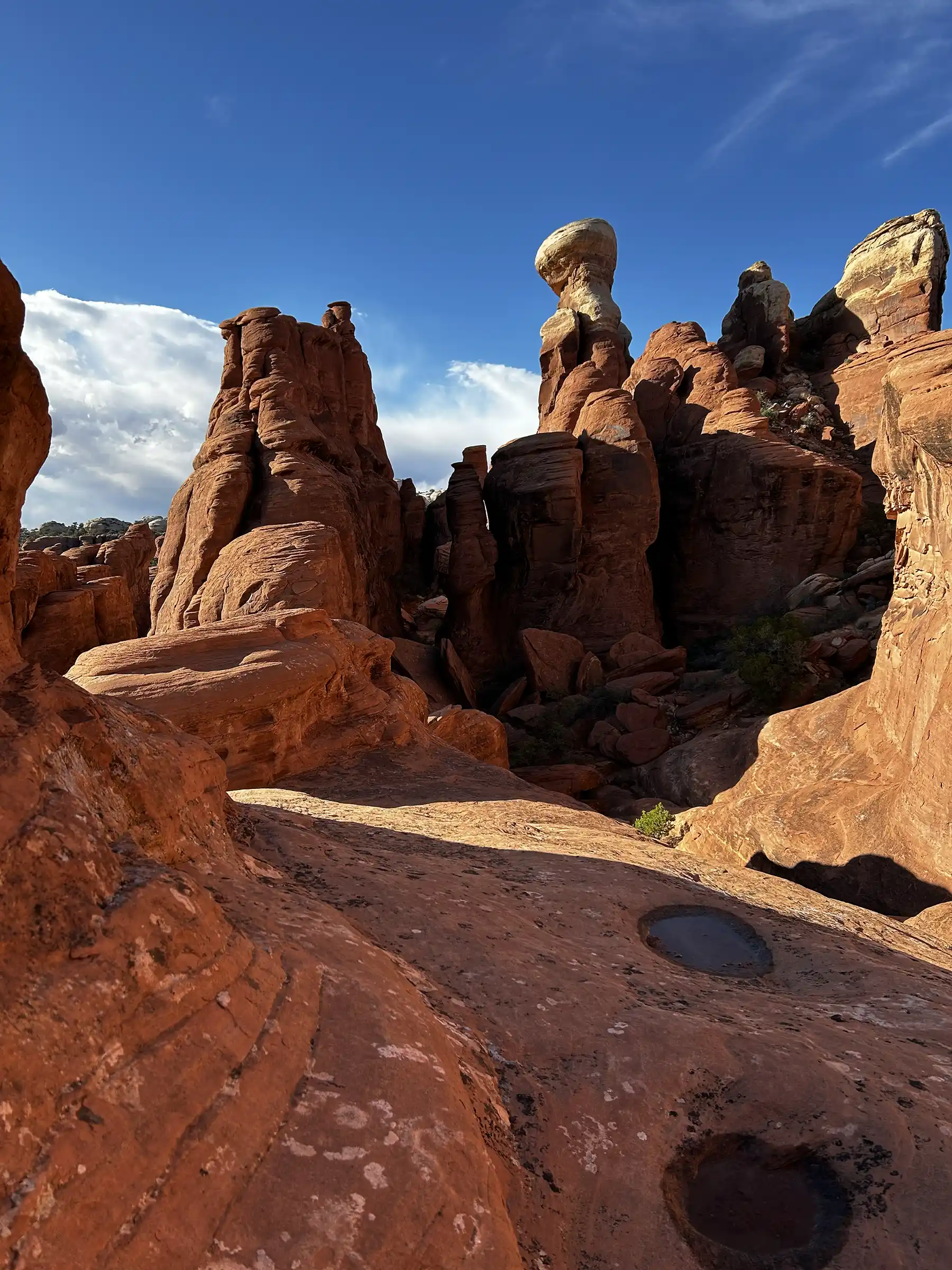
Birds are often easiest to notice because they use the full vertical landscape. Ravens and vultures ride warm air above fins, swifts work cliff faces, and smaller birds move through shrubs, pinyon-juniper pockets, and washes where seeds, insects, and shade collect.
What birds might you see?
Canyon wrens may announce themselves by sound before you see them, and bird activity changes between open slickrock and brushier drainages. Scan cliff faces, the sky above fins, Courthouse Wash, pinyon-juniper edges, and vegetation influenced by the Colorado River. Binoculars help you study behavior without stepping off durable surfaces.
Birding without crowding wildlife
Stay on established trails, rock, and durable surfaces. Desert soil crust helps hold the ground together and is easy to crush.
Mammals in Arches National Park
Arches has nearly 50 known mammal species, but many are nocturnal or wide-ranging. Look for tracks, scat, burrow openings, clipped vegetation, and feeding sign in sandy soil instead of judging the park by road sightings. Mule deer favor vegetation and water-influenced corridors, rock squirrels linger around busy areas, and coyotes usually keep distance from crowded trailheads.
Rare mammals and desert bighorn sheep
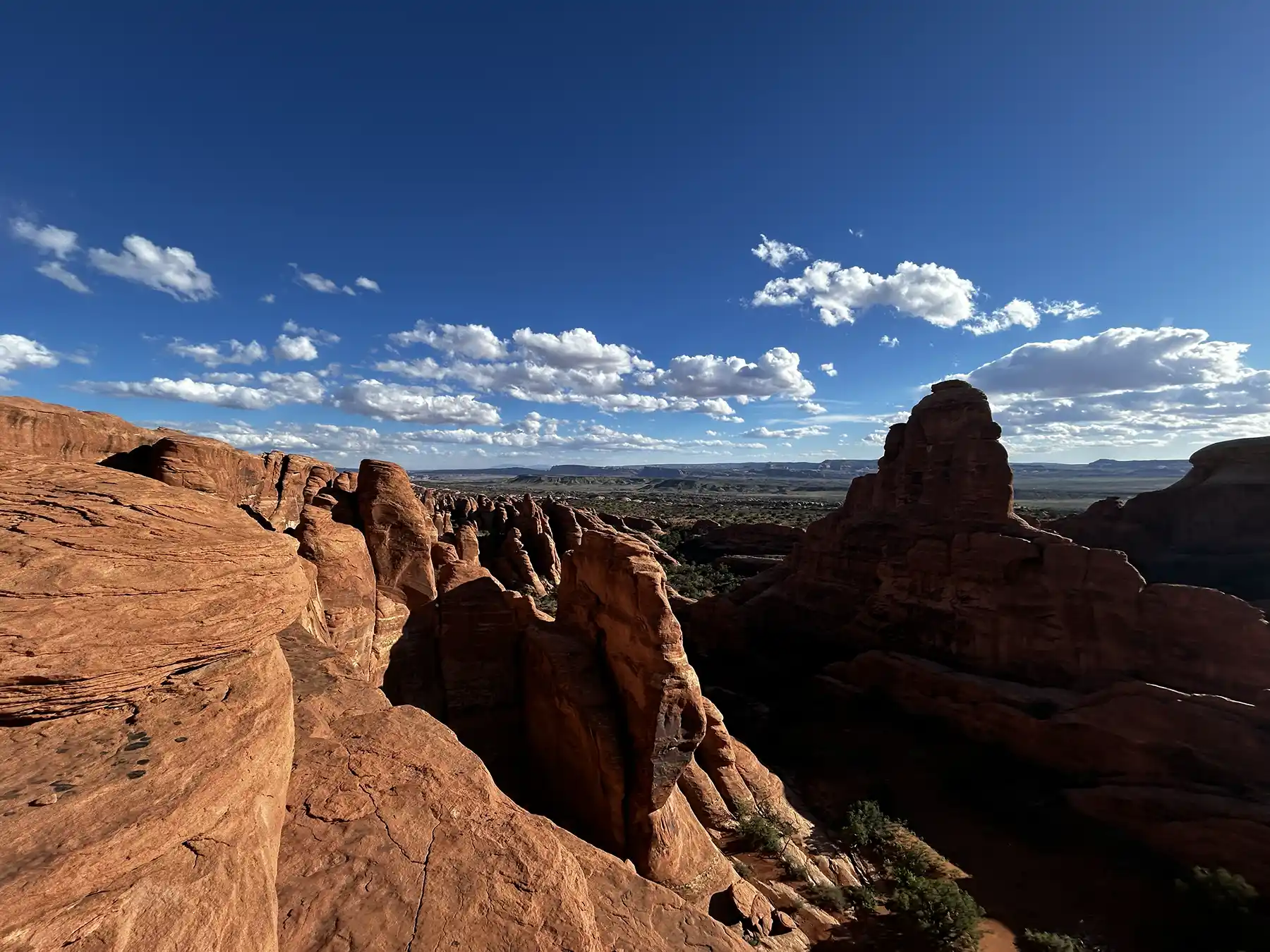
Foxes, ringtails, bobcats, mountain lions, and bats fit into the Arches ecosystem, but most visitors never see them. Desert bighorn sheep live year-round in the park and use steep rocky terrain, side canyons, and areas near the Colorado River. The National Park Service notes that some visitors may see them along Highway 191 south of the visitor center, but treat any sighting as a bonus.
Do not chase a sighting
Give wildlife a quiet exit. Animals should never have to change direction because a visitor is closing in.
Reptiles, lizards, and snakes in Arches
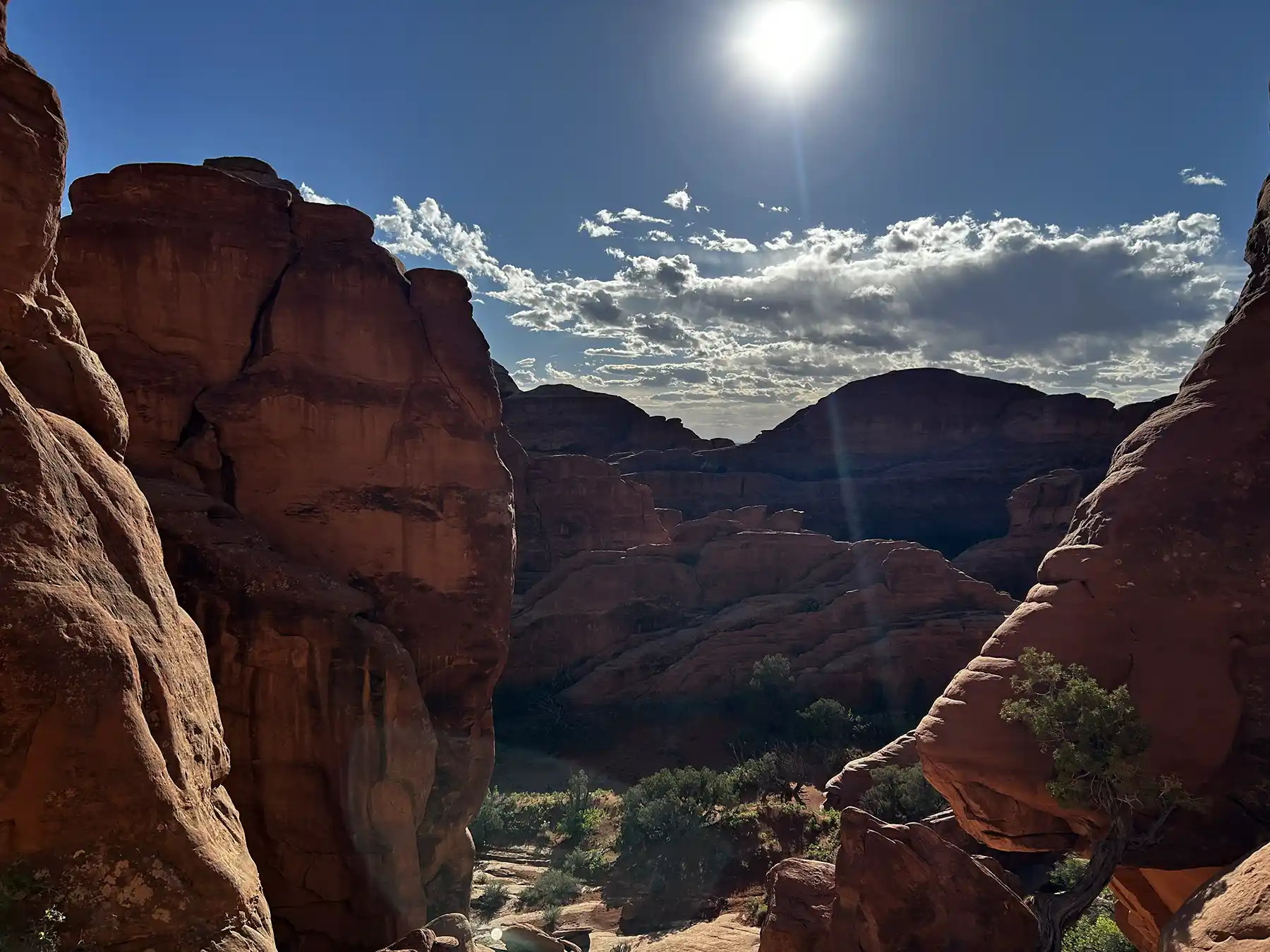
Reptiles are well suited to Arches because they regulate body temperature with sun, shade, and rock warmth. Lizards may sprint across sand, flash push-up displays, freeze beside shrubs, or retreat into cracks. Their activity rises and falls with surface temperature.
Snake safety in Arches
Snakes live in Arches, but most avoid people when given room. Gopher snakes are non-venomous; the midget-faded rattlesnake is venomous. Step carefully around brush, never place hands into blind cracks or shaded holes, and do not move a snake off trail.
Warm rock does not mean harmless terrain
Shaded rock gaps can shelter lizards, snakes, spiders, and scorpions. Look before sitting, stepping, or reaching.

Wanderers' gear note
Wildlife watching rewards simple, practical gear
For Arches, prioritize water, shade, and distance-viewing tools.
How to watch Arches wildlife safely and responsibly
The safest wildlife watching in Arches starts with clean habits: secure snacks, pack out trash, keep crumbs out of picnic areas, and never reward animals for approaching people. Food-conditioned ravens, rodents, and squirrels can become aggressive or injured near roads, parking lots, and campsites. If an animal appears sick, injured, trapped, or bold, give it space and report it to park staff.
Wildlife watching essentials for Arches
- Binoculars for birds, bighorn sheep, and mammals across washes.
- At least one gallon of water per person daily, with more for heat.
- Sun hat, sunglasses, sunscreen, breathable long sleeves.
- Headlamp for dawn, dusk, or campground walks.
- Closed-toe footwear for rocky pullouts and uneven trails.
Protect the desert under your feet
Stay on established trails, rock, and durable surfaces. Biological soil crust stabilizes desert ground and is easily damaged.

Common questions about wildlife in Arches National Park
Use these quick answers to plan a responsible Arches wildlife stop without disturbing desert animals or fragile habitat.